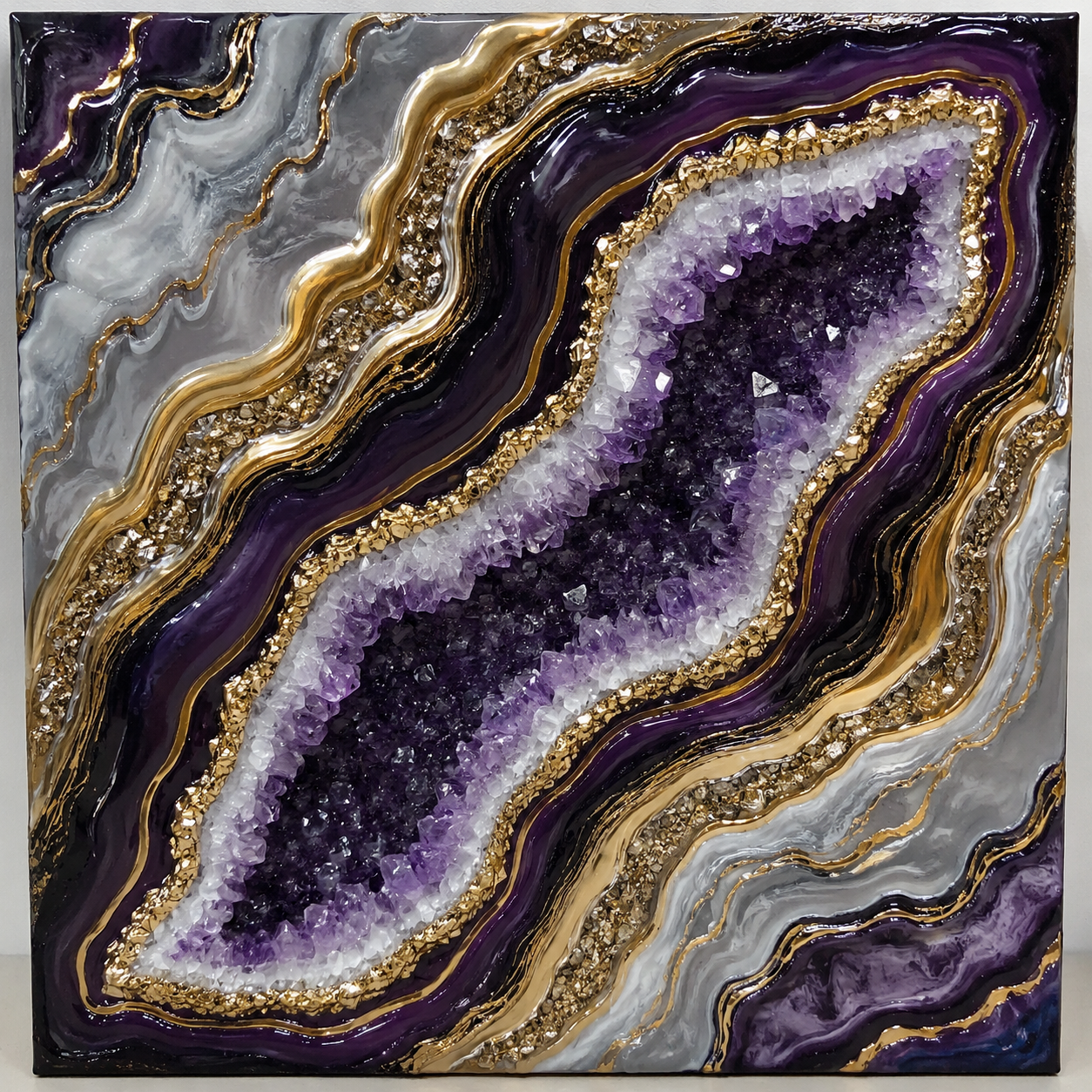
Geode Resin Art
Mimics the cross-section of natural crystal geodes using thick, gel-like resin and metallic mica pigments. The resin must be high viscosity so it holds its shape when pushed into lines and formations.
Use: Geode Resin 2:1
From choosing your first epoxy resin to mastering geode art, ocean pours, floral casting and deep cast sculptures. This is the only resin art guide you will ever need, written by artists for artists.
Understanding the medium before you pick up the bottle. Most beginners skip this. Do not.
Geode resin art, one of the most popular resin art techniques in India
Resin art is the practice of using epoxy resin, a two-part liquid system of resin and hardener, as a creative medium. When the two components are mixed, a chemical reaction called polymerisation begins, gradually hardening the liquid into a solid, glass-like surface. That transformation is what makes resin art so compelling. You work in a window of liquid time, then the material sets your vision permanently.
Unlike paint, resin is self-levelling, three-dimensional, and forms a depth no other medium can replicate. You can pour it over canvas, into moulds, onto tabletops, around flowers, inside frames. The applications are genuinely limitless.
What separates artist-grade epoxy resin from industrial resin is clarity, safety and workability. Industrial resins are full of VOCs, generate intense heat, and cure into a cloudy, brittle result. Artist resins, like every product Resin Cult makes, are formulated to be VOC-free, crystal clear, non-yellowing, and safe enough to work with at your dining table.
Epoxy resin art exploded in India between 2018 and 2024, moving from a niche craft to a mainstream art form. Today, tens of thousands of Indian artists and hobbyists work with resin to create artwork, home decor, jewellery, functional pieces and professional commissions.
Resin art is not a single style or technique. It is a medium, like acrylic paint or clay, that supports dozens of distinct artistic expressions. Geode art, ocean art, abstract pours, floral preservation, coaster making, tray casting, deep river tables. Every one of these is resin art, and each requires a different type of resin formulation to execute properly.
This is the central insight most guides miss. The resin you choose is as important as the technique itself. Using a thin coating resin for geode art gives you flat, disappointing lines. Using a high-viscosity geode resin for deep casting gives you a cloudy, cracked result. The resin must match the job. That is exactly why Resin Cult was built: six distinct resins, each engineered for specific techniques.
Drag the slider to see what actually happens to your resin art. The same piece, the same artist. The only difference is the resin used.
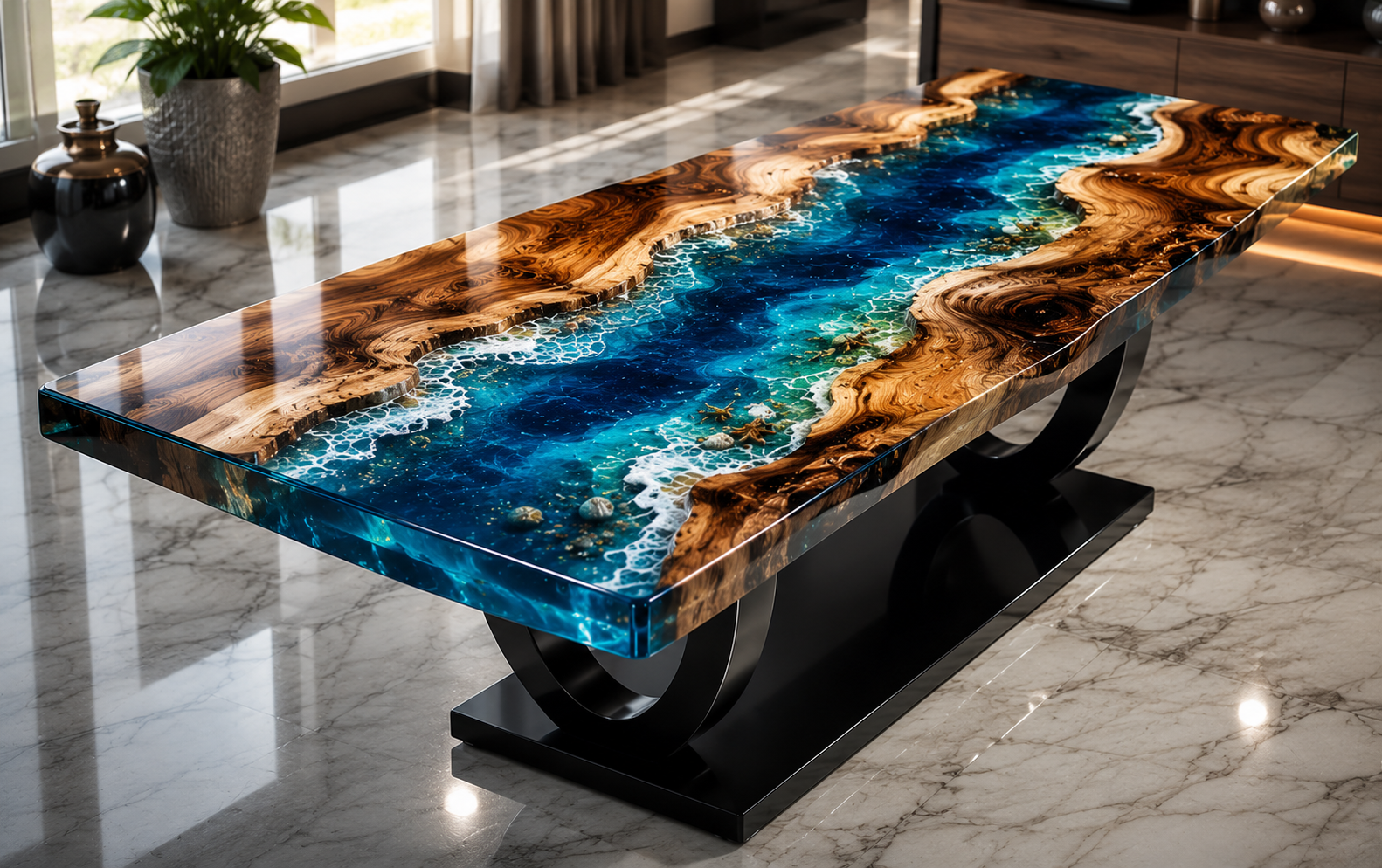 Other Resin
Resin Cult
Other Resin
Resin Cult
Drag the handle left and right to compare
Yellowing within weeks, trapped bubbles, cloudy haze, strong fumes, uneven cure and a brittle finish that scratches and cracks. Your hours of work, ruined by the wrong material.
Crystal clear and non-yellowing for years, auto bubble release, zero VOC and no fumes, even self-levelling cure, and a hard, scratch-resistant, glass-like finish that holds its clarity.
Six major styles of resin art. Each beautiful, each technically different, each requiring the right resin. The image slots below are ready for your own resin art photos.
Mimics the cross-section of natural crystal geodes using thick, gel-like resin and metallic mica pigments. The resin must be high viscosity so it holds its shape when pushed into lines and formations.
Use: Geode Resin 2:1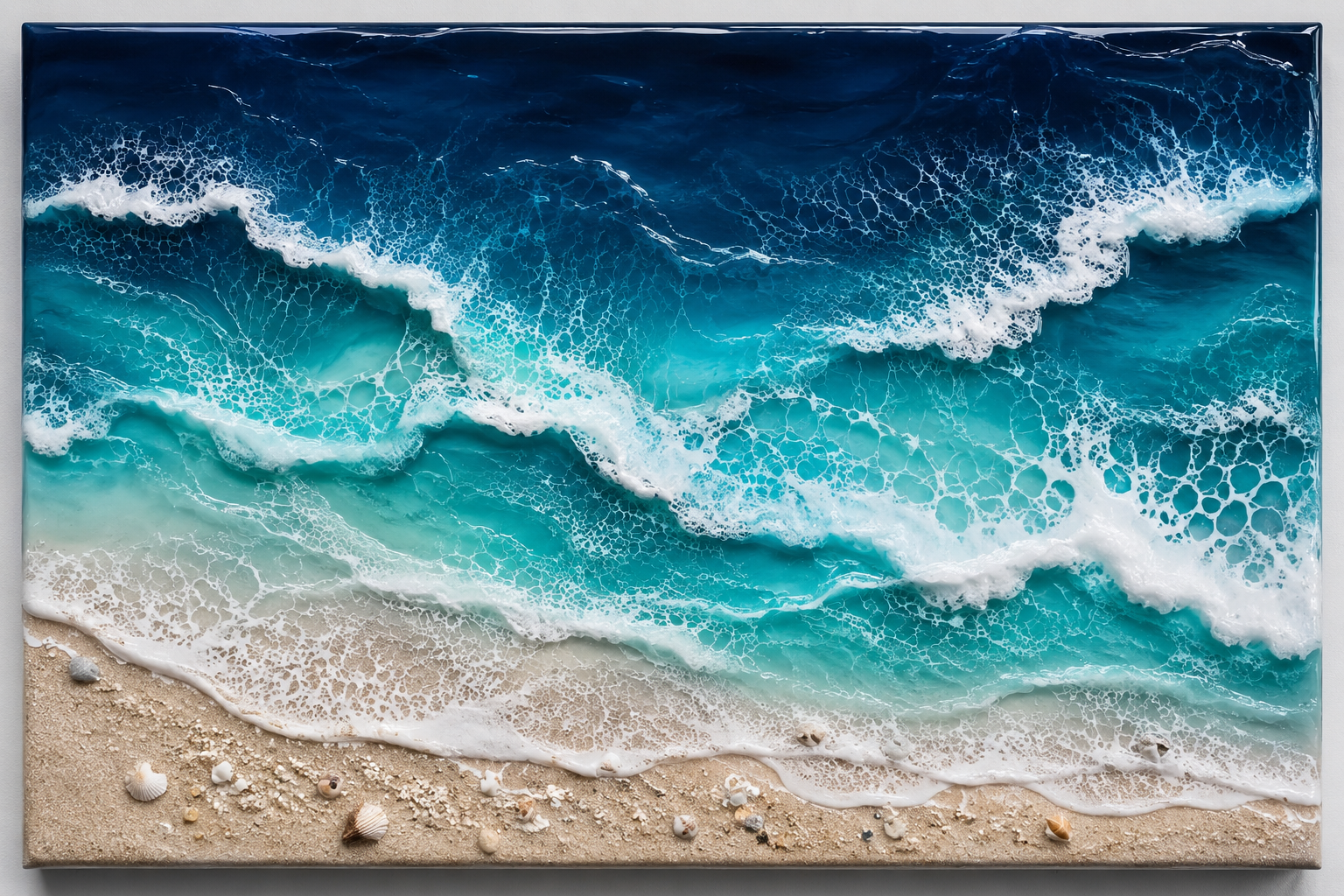
Creates the illusion of ocean waves using layered resin pours in blues, whites and teals. Requires a resin with long pot life to allow layering and a self-levelling property to form natural wave shapes.
Use: Artist Resin 2:1 or 3:1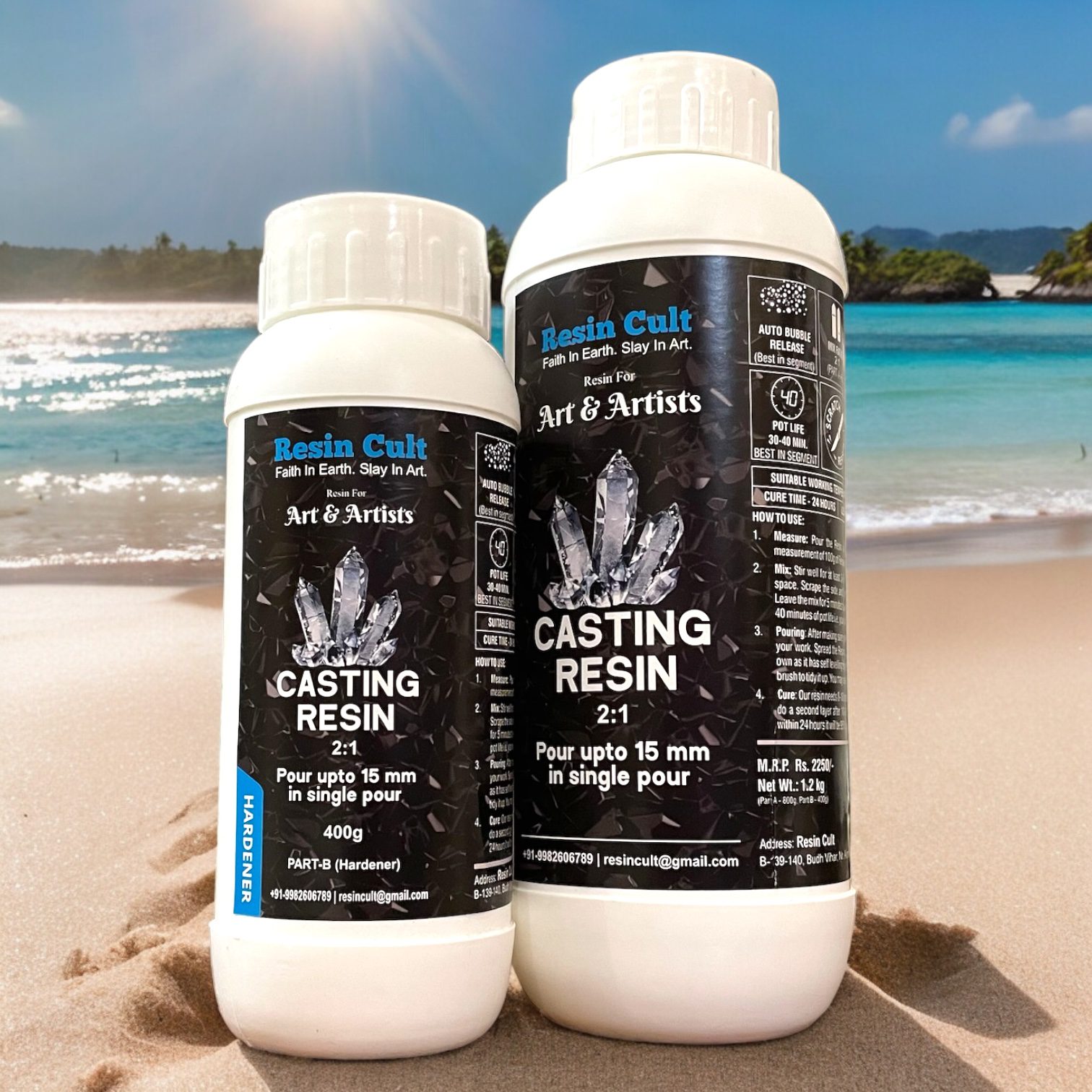
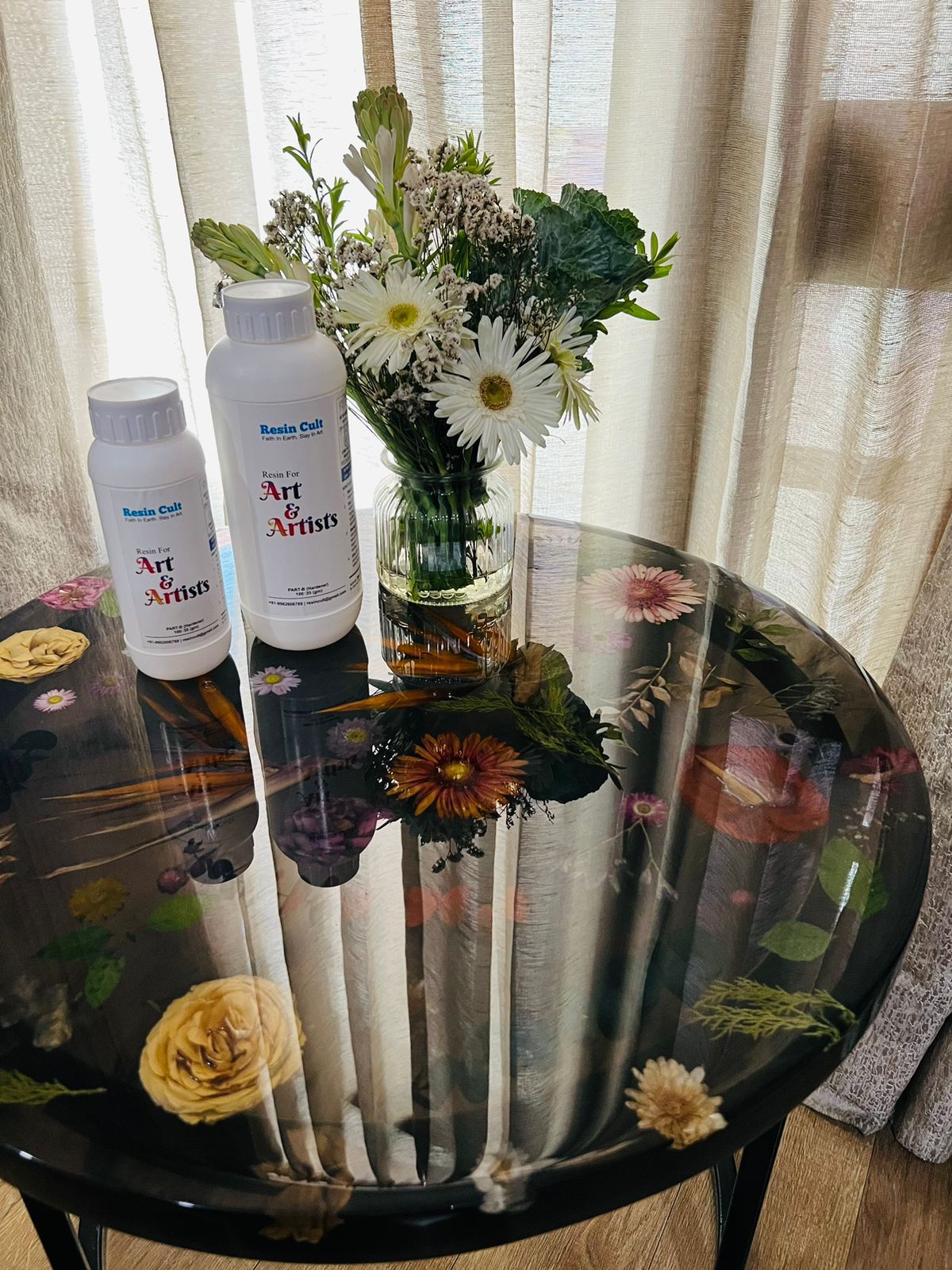
Preserving real flowers, wedding blooms and memorial pieces inside crystal clear resin. Requires a resin that does not yellow, does not react with organic matter, and keeps flowers from changing colour.
Use: Artist Resin 2:1 or Crystal Clear 2:1
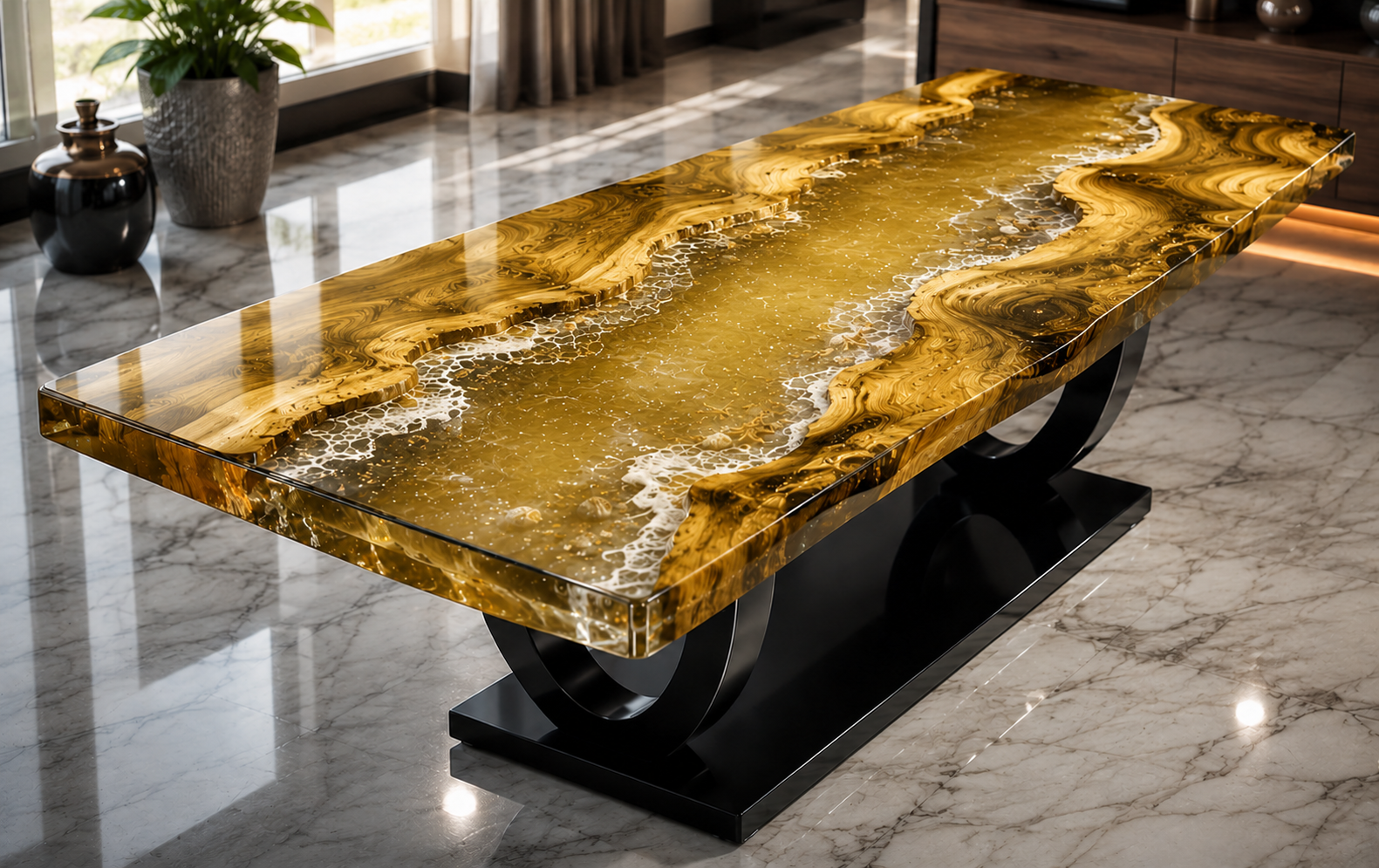
Pouring resin in thick layers of 25mm or more for river tables and sculptural blocks. Standard resins crack, yellow or generate dangerous heat in thick pours. Deep cast resin has a slow-cure chemistry to handle depth.
Use: Diamond Coat Deep Cast 3:1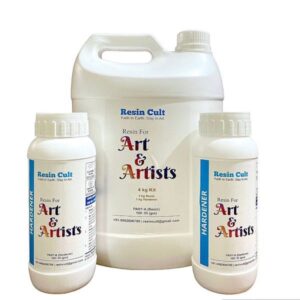
Free-form pouring, swiping and manipulating resin mixed with pigments and alcohols to create abstract paintings. The artist works in the pot life window, typically 20 to 40 minutes, to create unrepeatable compositions.
Use: Artist Resin 3:1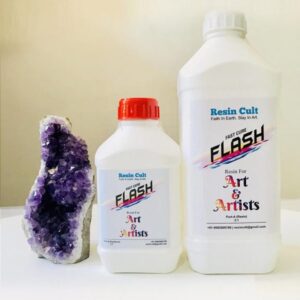
Coasters, keychains, small trays and gifts. Functional pieces that need to be produced quickly and in batches. Flash Fast Cure resin halves the standard cure timeline without sacrificing clarity or quality.
Use: Flash Fast Cure Resin 3:1Each Resin Cult resin is engineered for a specific set of applications. Here is a detailed breakdown of every product: what it is, what it does, who it is for, and why it works.
 2:1 Ratio
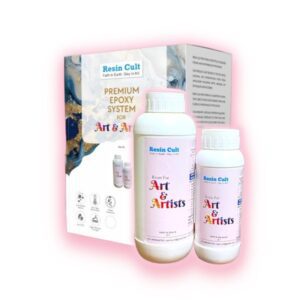
The workhorse of the range. Crystal clear, self-levelling, with an automatic bubble release system. This is the resin most artists start with and many professionals never leave. It handles coating, ocean art, geode art, floral casting, trays and marble effect in one formulation.
Most Popular
The most artist-friendly resin in the range, and the most popular. The 3:1 ratio makes measuring precise and intuitive. Built for both casting and coating, with exceptional clarity, a forgiving 40-minute pot life, and beautiful results for abstract pours, canvas, coasters and jewellery. If you are starting out, start here.
 High Viscosity
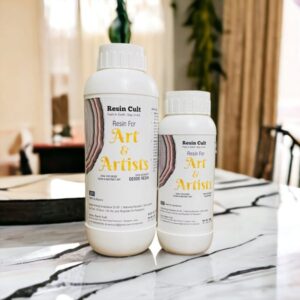
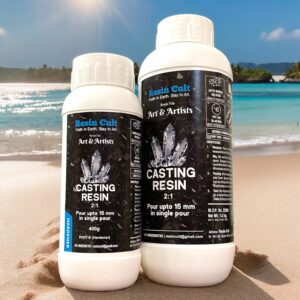
This is not a regular resin. The Geode Resin 2:1 has a deliberately thick, gel-like consistency unlike anything else in the range. That viscosity is everything in geode art. It is what lets you push, shape and hold the crystal-like formations that define the style. Thin resin runs and flattens. This does not.
 Ultra Clear
When absolute clarity is non-negotiable. The Crystal Clear Epoxy Resin 2:1 is engineered to cure with optical-grade transparency. No cloudiness, no haze, no colour tint. Ideal for encapsulating objects, jewellery casting, floral preservation, and any project where the resin itself needs to be virtually invisible and glass-like.
Fast Cure
Time is money when you run a resin art business. The Flash Fast Cure resin halves the standard cure time, fully cured in 10 to 12 hours instead of 24. You still get a 20 to 30 minute pot life to work in, crystal clear results, UV resistance and zero VOC. This is the professional's choice for batch production.
Deep Cast
Standard resins cannot be poured thick. They generate excessive heat, crack, cloud or all three. The Diamond Coat Deep Cast resin is chemically engineered to manage heat at depth, letting you pour layers of 25mm or more without the failures that plague regular resins. River tables, thick sculptures and live-edge furniture are its domain.
Every specification, every product, in one place. Use this to make the right choice for your next project. Scroll sideways on mobile to see all columns.
| Resin | Ratio | Pot Life | Cure Time | Max Layer | Viscosity | UV Resist | Best For |
|---|---|---|---|---|---|---|---|
| Artist Resin 2:1 | 2:1 | 40 min | 12 hrs | 4 to 6 mm | Low, self-levelling | Yes | Ocean art, florals, coating, trays |
| Artist Resin 3:1Popular | 3:1 | 40 min | 24 hrs | 6 mm | Low, self-levelling | Yes | Beginners, abstract, canvas, coasters |
| Geode Resin 2:1 | 2:1 | 30 to 40 min | 24 hrs | Thick texture | High, gel-like | Yes | Geode art, 3D crystal effects |
| Crystal Clear 2:1 | 2:1 | 30 to 40 min | 24 hrs | Casting depth | Low to medium | Yes | Encapsulation, jewellery, florals |
| Flash Fast Cure 3:1Business | 3:1 | 20 to 30 min | 10 to 12 hrs | 6 mm | Low, self-levelling | Yes | Batch work, coasters, commercial |
| Diamond Coat Deep Cast 3:1 | 3:1 | 30 to 45 min | 48 to 72 hrs | 25mm+ per layer | Low to medium | Yes | River tables, thick sculptures |
All Resin Cult products are VOC-free, fume-free and non-yellowing.
Answer these questions and the right resin becomes obvious. Stop guessing and match the resin to your specific project.
You need the most forgiving system with the longest working time and the most intuitive ratio. That is the Artist Resin 3:1. Forty minutes to work, an easy 3:1 ratio, and it handles almost every beginner project.
Shop Artist Resin 3:1Geode art needs a resin that stays where you put it. You need high viscosity, not self-levelling. The Geode Resin 2:1 is engineered specifically for this style.
Shop Geode Resin 2:1Flower preservation demands absolute clarity and a resin that will not react with organic matter or cause colour change. Use Artist Resin 2:1 or Crystal Clear 2:1. Both keep flowers from changing colour inside the resin.
Shop Crystal Clear 2:1Pour standard resin more than 6mm thick and it will heat up, crack or turn cloudy. For river tables and deep sculptures you must use the Diamond Coat Deep Cast Resin 3:1.
Shop Diamond Coat Deep CastWhen you make coasters, gifts or festive items in volume, a 24-hour cure is a bottleneck. The Flash Fast Cure 3:1 cuts that to 10 to 12 hours, so you get two cycles in the time standard resin does one.
Shop Flash Fast Cure 3:1Clarity standards for jewellery are the highest of any application. Any haze kills the piece. The Crystal Clear Epoxy Resin 2:1 is formulated to optical-grade clarity, as close to invisible resin as you can get.
Shop Crystal Clear 2:1You have chosen your resin. Now what? Here is the complete process, from workspace setup to finished piece.
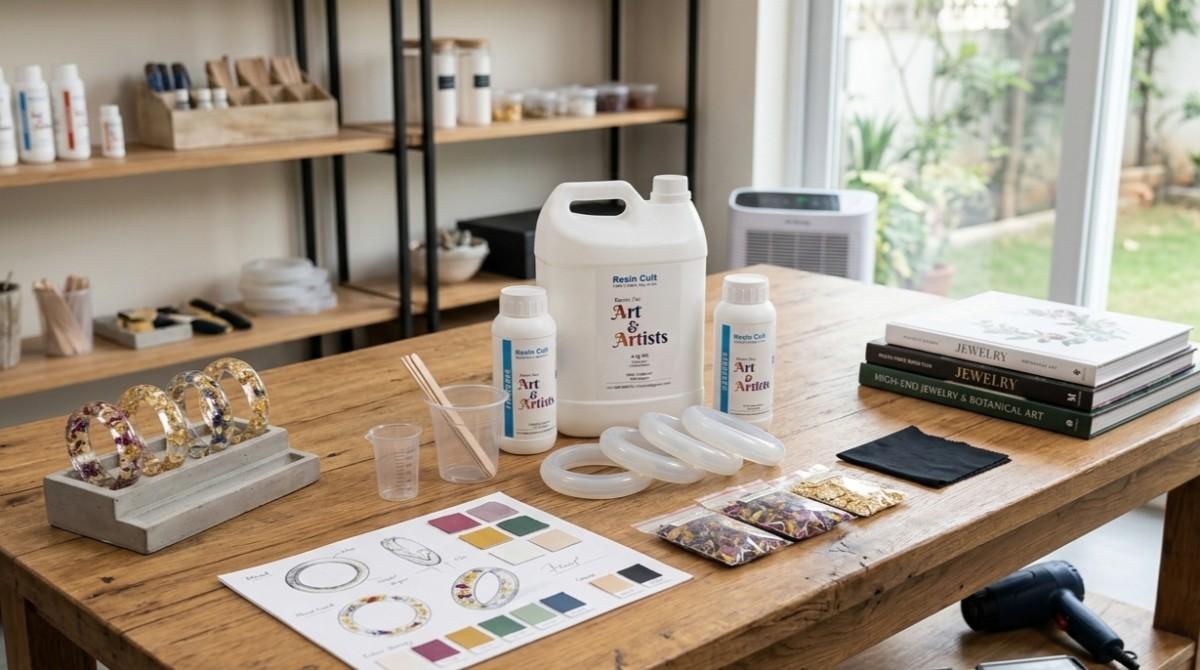
Resin art needs a clean, level, dust-free surface. Resin is self-levelling, so if your surface is even slightly tilted, the resin will pool to one side. Use a spirit level before you start. Cover your workspace with a silicone mat or plastic sheet, since resin sticks to almost everything except silicone.
Temperature matters enormously. Ideal working temperature is 24 to 30 degrees Celsius. Below 20 degrees, resin thickens, cures slower and can turn cloudy. Above 35 degrees, pot life shortens significantly.
The single biggest beginner mistake is an incorrect mixing ratio. Resin and hardener are not interchangeable liquids. They are two halves of a chemical reaction. If the ratio is wrong, the resin will not cure fully and you get a sticky, soft surface that cannot be fixed.
Use a digital scale accurate to 1 gram. For a 2:1 ratio, measure 200g resin plus 100g hardener. For 3:1, measure 300g resin plus 100g hardener. Use our Resin Calculator for exact measurements by project size.
Pour the hardener into the resin, not the other way around. Stir slowly and deliberately for a full 3 minutes, scraping the sides and bottom of the container as you go. Do not rush. Under-mixed resin leaves soft spots in the cured piece.
Slow stirring is key. Fast mixing whips air into the resin and creates bubbles that are hard to remove. If your resin looks cloudy right after mixing, that is air, and it is fixable before the resin cures.
You can add pigment powders, mica powders, alcohol inks or resin colourants to mixed resin. The rule is to never exceed 10 percent by weight of your total resin mixture. Too much colourant weakens the chemical cure.
For best results, use Resin Cult's own pigment range and premium mica pigments. They are formulated to be chemically compatible and produce the most vibrant results.
Once resin is mixed, your working clock starts. For most Resin Cult resins you have 40 minutes before it thickens and becomes unworkable. Use that time well. Pour, tilt, and use a brush or palette knife to create your effects.
For Flash Fast Cure resin your window is 20 to 30 minutes, so plan your technique before you mix. Do not add fresh resin to a piece that has started curing. The seam will show and the bond will be weak.
Once the piece is placed and you are happy, cover it lightly with a box or dome to keep dust off. Do not wrap it, since resin needs air to cure. Leave it undisturbed for the full cure time: 12 hours for Artist Resin 2:1, 24 hours for most others, 48 to 72 hours for Diamond Coat Deep Cast.
After initial cure the piece is solid but may still have a slight give. Full hardness and chemical stability is reached at 7 days. Safe to handle after 24 hours, safe to use and display after 7 days.
Once you have mastered the basics, these techniques separate competent artists from exceptional ones.
A layering method for ocean art where white resin is applied in thin streams over a blue base before it fully cures. The layers blend at the edges, creating realistic wave lace. Timing is everything. Too early and the white sinks, too late and it sits on top.
Adding drops of alcohol ink to wet resin and using gentle heat to push the ink into organic, cell-like patterns. The alcohol burns off and the pigment remains, creating ethereal marbling. Works best with a slightly extended working time.
Building a three-dimensional piece by pouring multiple thin layers, each cured between pours. Each layer can hold different objects, colours or effects. The result has genuine depth, like looking into glass. Use standard resin only, never deep cast resin, for this.
Embedding pressed, fully dried flowers and leaves into crystal clear resin. The key is zero moisture before encasing, since moisture causes cloudiness and can prevent cure. Press flowers for 2 to 4 weeks and seal them before embedding.
Resin Cult resins are VOC-free and artist-friendly, but a few basic practices will make your workspace healthier and your results better.
Trusted by more than 10,000 artists across India. Here is what makes Resin Cult different from every other resin brand in the market.
Questions that come up in every resin art workshop we run. Answered plainly, without fluff.
Do not waste another batch on the wrong formulation. Every Resin Cult product is built for a specific purpose. Shop with clarity.
Zero VOC · Non Yellowing · PAN India Shipping · Free above ₹6,000