

Mastering Epoxy Resin Earrings: The Ultimate Guide to Crafting in Humid Climates
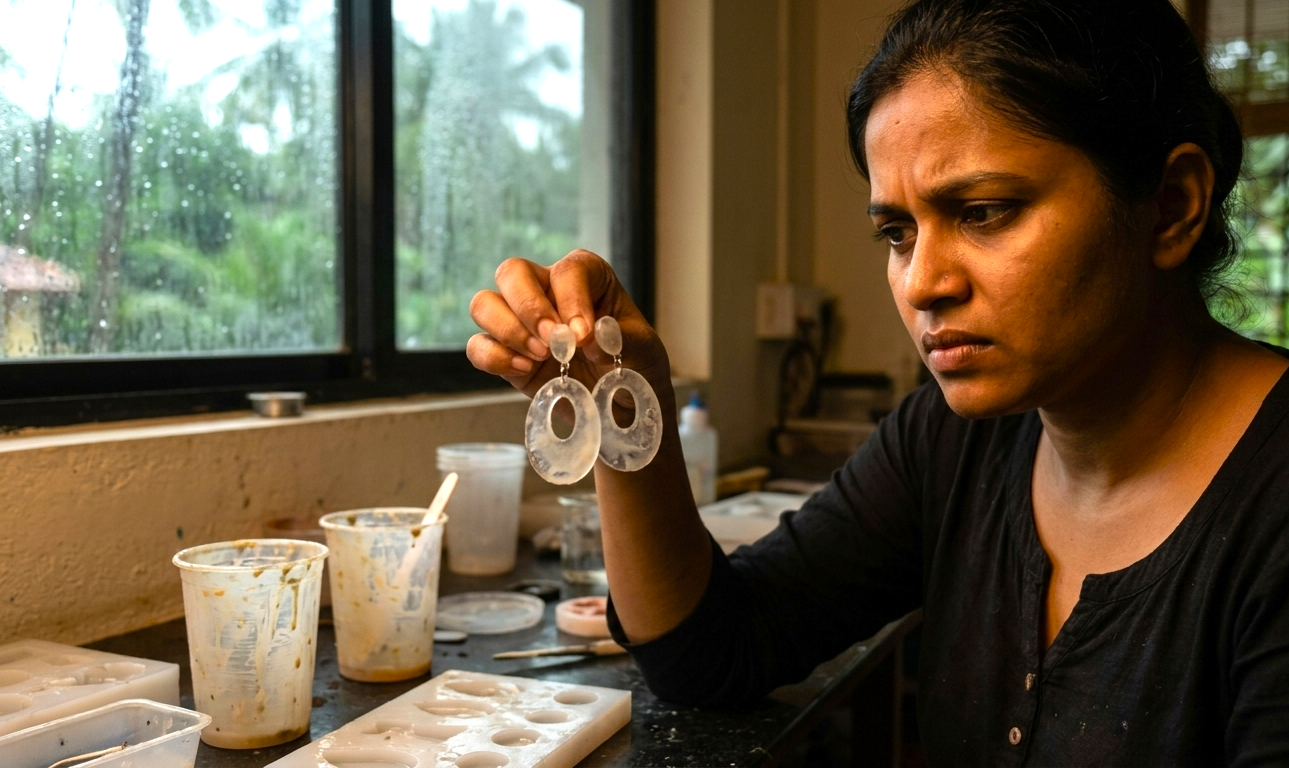
For many artisans and jewelry lovers in India, humidity is the silent enemy of the perfect finish. If you’ve ever pulled a pair of epoxy resin earrings out of a mold only to find them sticky, cloudy, or full of “blushes,” you aren’t alone. Humidity can turn a professional piece of wearable art into a disappointing DIY project overnight.
In this guide, we’re diving deep into the science of crafting in moisture-heavy environments. Whether you are a beginner looking to make your first pair of handmade resin earrings or a pro trying to scale your business, these tips will ensure your resin art earrings stay crystal clear, no matter the weather.
The Science: Why Does Humidity Hate Epoxy Resin?
Before we get into the “how-to,” we need to understand the “why.” Epoxy resin is a chemical reaction. When you mix your resin and hardener, they begin an exothermic reaction (they create heat).
Humidity is simply water vapor in the air. Because epoxy is “hygroscopic” (it attracts moisture), those water molecules can interfere with the chemical bond. This leads to:
- Amine Blush: A greasy, cloudy film on the surface.
- Flash Curing: The resin gets too hot too fast.
- Permanent Tackiness: The earrings never fully harden.
Here are the Steps to Master Epoxy Resin Earrings in a humid climate:
1. Choosing the Right Resin for Your Climate
Not all resins are created equal. When working on epoxy resin earrings, the “Ratio” and “Curing Time” are your best friends.
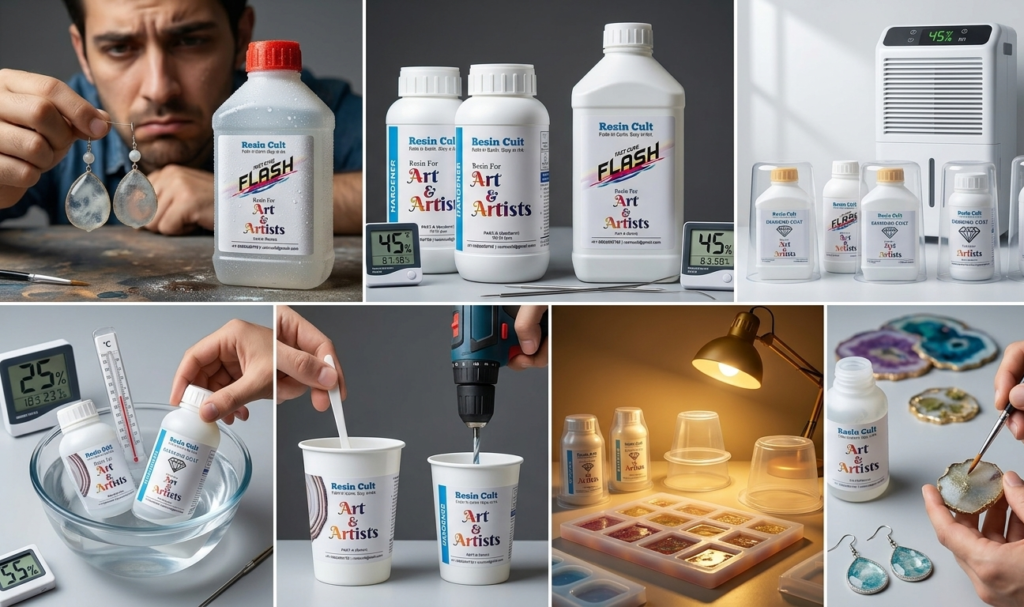
- For Fast Turnaround: In humid weather, you want a resin that doesn’t stay in the “liquid phase” for too long. A product like Flash Resin 3:1 (with a 40-minute work time) is ideal because it moves into the curing stage before moisture can settle on the surface.
- For High Gloss: If you are doing top-coats on resin flower earrings, use a 2:1 Artist Resin. These are often thicker and more resilient against surface moisture than thinner, “deep pour” varieties.
2. The Golden Rule: Control Your Environment
You don’t need a laboratory, but you do need a “dry zone.” If the humidity in your room is above 60%, your handmade resin earrings are at risk.
- Invest in a Dehumidifier: This is the #1 tool for serious resin artists in India. Running a dehumidifier for 2 hours before you pour can change your results instantly.
- The AC Trick: Air conditioners naturally pull moisture out of the air. If you work in an AC room, ensure the unit isn’t blowing directly onto the molds, as this can cause uneven curing.
3. Preparation: The “Warm Bath” Method
Humidity often goes hand-in-hand with cooler rainy-season temperatures. Cold resin is thick and traps bubbles.
Before mixing your epoxy resin earrings, place your sealed bottles in a bowl of warm (not hot!) water for 10 minutes. This thins the resin, allowing bubbles to rise and pop before the moisture in the air has a chance to interfere with the surface.
Note: Ensure no water droplets from the bottles fall into your mixing cup! Even one drop can ruin the entire batch.
4. Mixing Techniques to Beat the “Cloud”
When it’s humid, you must be more disciplined with your mixing.
- Double Mixing: Mix in one cup, pour into a second clean cup, and mix again. This ensures no unmixed “streaks” of hardener remain, which are the primary cause of sticky spots in resin art earrings.
- Slow and Steady: Fast mixing introduces air. In humid air, those bubbles are harder to remove because the air itself is “heavy.”
5. Protecting the Cure: The “Cover Up”
The most dangerous time for epoxy resin earrings is the first 6–12 hours of curing. This is when “Amine Blush” (that oily film) forms.
- The Dust Cover: Always cover your molds with a plastic container or a cardboard box.
- The Light Bulb Trick: Some artists place a small desk lamp (with an old-school incandescent bulb that generates heat) near the curing station. The slight increase in temperature keeps the “micro-climate” around the resin dry.
6. Dealing with Real Flowers in High Humidity
If you are making resin flower earrings, moisture is a double threat. If your flowers aren’t 100% dry, the humidity trapped inside the flower will react with the resin, turning the petals brown or creating a “ring” of bubbles.
- Use Silica Gel: Don’t air-dry flowers in humid climates; they will rot before they dry. Use silica sand to pull every bit of moisture out.
- Seal the Petals: Dip your dried flowers in a bit of Artist Resin 3:1 and let them “flash dry” before placing them into the main earring mold.
7. How to Fix “Sticky” Earrings
What if the humidity won? Don’t throw your handmade resin earrings away!
- If it’s just a film: Wash the earrings with warm soapy water. This often removes the “Amine Blush” film.
- If it’s slightly tacky: Lightly sand the surface and apply a fresh “top coat” of Geode Resin 2:1 on a day when the humidity is lower.