


The Ultimate Guide to Resin Art Earrings: From Art to Science (2026)
In the landscape of modern fashion, a significant shift is occurring. We are moving away from the mass-produced and toward the meaningful. At the center of this movement are resin earrings—a medium that allows for infinite creativity, unparalleled comfort, and the preservation of nature itself.
Whether you are a collector looking for the perfect pair of resin art earrings or an artisan in India looking to master the chemistry of the craft, this guide is your definitive resource. Over the next 2,000 words, we will pull back the curtain on the science, the style, and the secrets of high-end resin jewelry.
The Philosophy of the “Weightless” Revolution
For centuries, “statement jewelry” was a burden. To wear something beautiful often meant enduring heavy metallic weight that stretched earlobes and caused discomfort. The rise of resin earrings in India is, first and foremost, a functional revolution.
Why Resin is the 2026 Material of Choice
Resin is a liquid polymer that, when cured, mimics the optical clarity of glass and the hardness of stone—but at a fraction of the weight. This “Volume without Mass” allows designers to create oversized, architectural, and bold dangles that weigh less than a standard 5-rupee coin.
In a world where we are constantly on the move—from the boardroom to a sangeet—the ability to wear “wearable art” for 12 hours straight without fatigue is a luxury that traditional metals simply cannot provide.
💎 Chapter 1: The Philosophy of the “Weightless” Revolution
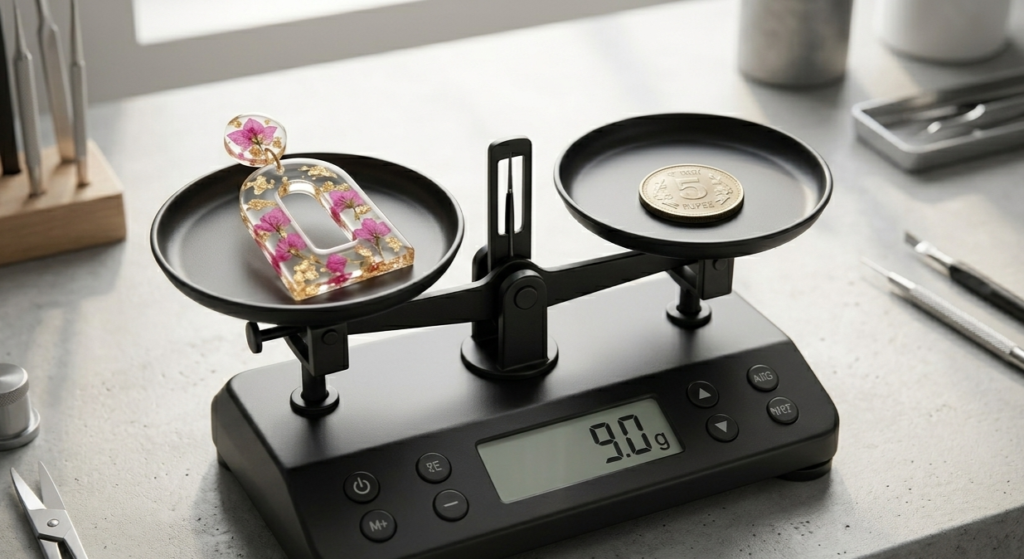
For centuries, “statement jewelry” was a burden. To wear something beautiful often meant enduring heavy metallic weight that stretched earlobes and caused discomfort. The rise of resin earrings in India is, first and foremost, a functional revolution.
Why Resin is the 2026 Material of Choice
Resin is a liquid polymer that, when cured, mimics the optical clarity of glass and the hardness of stone—but at a fraction of the weight. This “Volume without Mass” allows designers to create oversized, architectural, and bold dangles that weigh less than a standard 5-rupee coin.
In a world where we are constantly on the move—from the boardroom to a sangeet—the ability to wear “wearable art” for 12 hours straight without fatigue is a luxury that traditional metals simply cannot provide.
🧪 Chapter 2: The Chemistry of Clarity (Understanding Ratios)

To understand epoxy resin earrings, you must understand the “The Pour.” Resin is not a single product; it is a chemical reaction. Choosing the wrong resin for your project is the #1 reason for “failed” art.
1. The Low-Viscosity Specialist (3:1 Ratio)
When your goal is resin flower earrings, you need a resin that flows like water.
- The Physics: A 3:1 ratio resin is “thin.” This allows it to seep into the microscopic folds of a dried petal, displacing air.
- The Result: Crystal-clear preservation without the “silver halos” of trapped bubbles.
- Cure Time: These usually require 48–72 hours to reach full hardness, which keeps the heat low and protects the flower’s natural pigments.
2. The High-Viscosity Artist (2:1 Ratio)
If you want to create abstract marble patterns or “Geode” effects, you need a “thick” resin.
- The Physics: A 2:1 ratio resin has a honey-like consistency.
- The Result: It holds pigments in place. When you drop ink into it, the colors don’t bleed into a muddy mess; they stay as sharp swirls.
- Cure Time: Usually faster (24 hours), which is great for top-coating and “doming” the surface for a mirror-like finish.
🌿 Chapter 3: Mastering the Botanical Trend
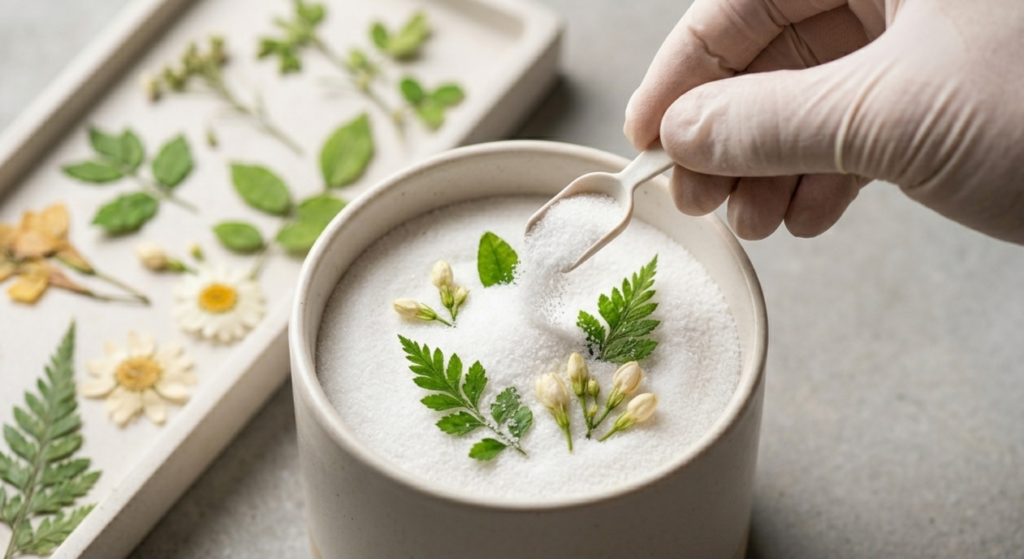
The most iconic style of 2026 is undoubtedly the resin flower earring. However, there is a massive difference between a hobbyist piece and a boutique-quality “Eternal Bloom.”
The “Bone Dry” Protocol
The biggest misconception is that you can put fresh flowers in resin. You cannot. Fresh flowers contain water, and water is “radioactive” to epoxy.
- The Rot Factor: Even a microscopic amount of moisture will cause the flower to turn brown or mold inside the resin after a few weeks.
- The Silica Solution: Professional handmade resin earrings use flowers dried in silica gel. This pulls the moisture out while keeping the 3D shape and vibrant “living” color of the petal.
Why Indian Flora is Unique
Artisans creating resin earrings in India have access to incredible botanicals—Bougainvillea, Jasmine, and Marigold. Each requires a different preservation time. Mastering the drying time for these specific Indian blooms is what makes your brand an authority.
🌦️ Chapter 4: The Humidity Factor (The Indian Context)

If you are crafting epoxy resin earrings in a humid climate like Mumbai, Kolkata, or during the Monsoon season, you are fighting a battle against water vapor.
Amine Blush: The Silent Art Killer
Humidity causes “Amine Blush”—a greasy, cloudy, or waxy film that appears on the surface of your resin. It ruins the shine and makes the earring look “cheap.”
- The Fix: You must control your environment. A dehumidifier is the best investment for a resin studio.
- The “Warm Bath” Hack: Keep your resin bottles in warm water (30°C) before mixing. This thins the liquid, allowing bubbles to escape faster than the humidity can settle on the surface.
🧐 Chapter 5: The Buyer’s “Expert Eye” Checklist
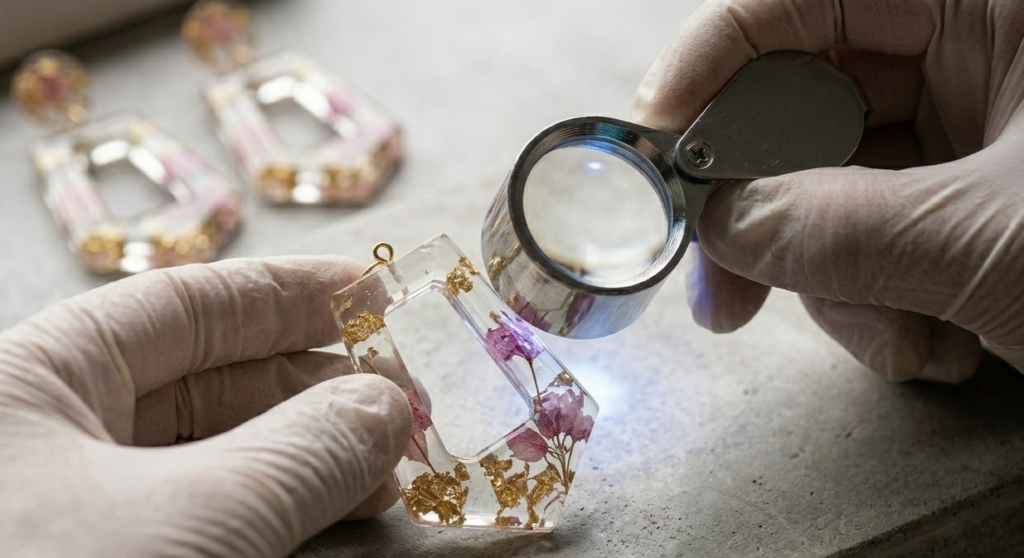
As handmade resin earrings become more popular, the market is flooded with low-quality “fast-resin” pieces. Use this checklist to ensure you are buying (or selling) a premium product:
- The Edge Test: Run your finger along the side of the earring. Is it sharp? Is there a “lip” of resin? Premium pieces are sanded through 6 different grits of sandpaper (up to 3000 grit) to feel like smooth sea glass.
- The “Bendy” Test: High-quality resin should be rock-hard. If the earring feels “rubbery” or you can bend it with your hands, the ratio was wrong, or it wasn’t cured at the right temperature.
- The UV Guarantee: Ask if the resin is UV-stabilized. Without HALS (Hindered Amine Light Stabilizers), your beautiful clear earrings will turn a sickly yellow within 3 months of sun exposure.
- Hardware Integrity: Resin art earrings are only as good as their hooks. Ensure the artisan uses 316L Surgical Steel or 925 Sterling Silver to prevent skin irritation.
👗 Chapter 6: Styling Resin for the 2026 Wardrobe
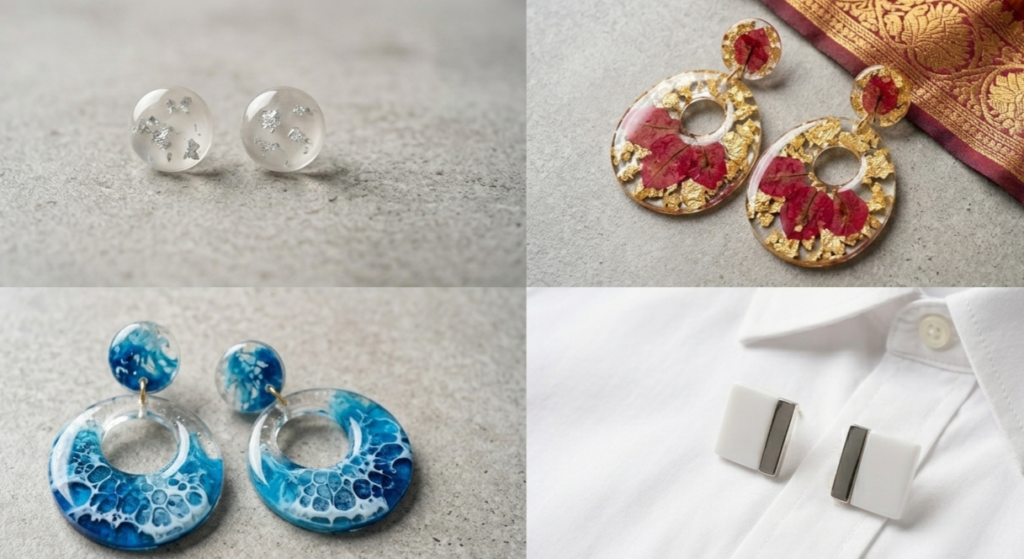
The versatility of resin art earrings is what keeps them trending. They bridge the gap between “Fine Jewelry” and “Fashion Jewelry.”
- The Corporate Minimalist: Small, translucent studs with silver flakes. They catch the light during a Zoom call without being “too much” for a boardroom.
- The Festive Maximalist: Oversized dangles featuring gold-leaf and vibrant red petals to match a Banarasi saree.
- The Vacation Aesthetic: Abstract “Ocean Wave” designs created with blue pigments and white “cells” (using Geode Resin 2:1).
🛠️ Chapter 7: The Artisan’s Troubleshooting Guide (The “Fix-It” Section)
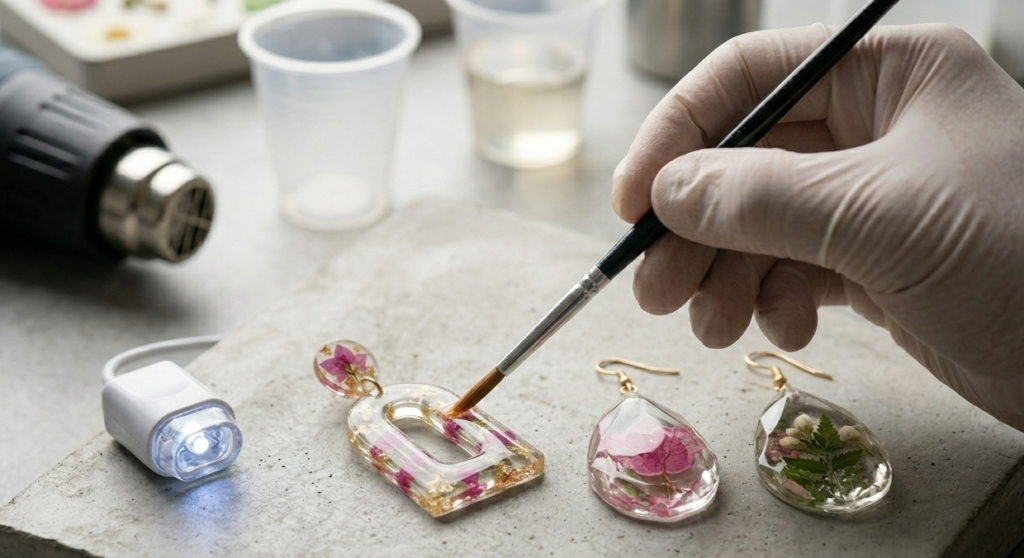
To make this a true “Hub Page,” we must solve the problems artisans face daily.
| Problem | Cause | Solution |
| Sticky Surface | Improper Mixing | Mix for 3 minutes, scraping sides and bottom. |
| Micro-Bubbles | Mixing Too Fast | Mix slowly; use a heat gun or isopropyl spray. |
| Yellowing | Low UV Resistance | Switch to a jewelry-grade resin with UV stabilizers. |
| Fish-Eyes (Dimples) | Silicone/Oil Contamination | Ensure your molds are clean and dry; don’t use oily mold releases. |
🌍 Chapter 8: Sustainability & The Ethics of Resin
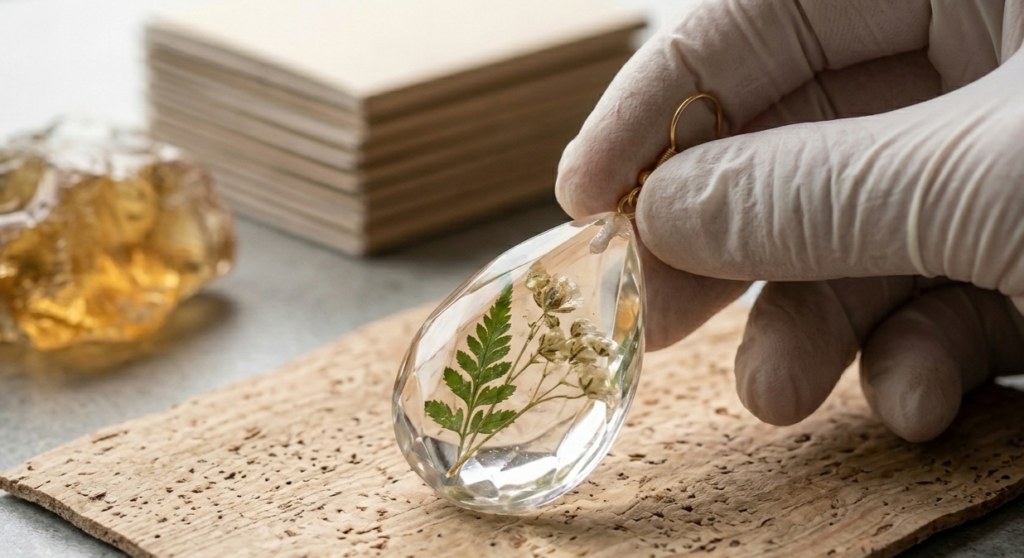
In 2026, every fashion choice is an environmental choice. Is resin sustainable?
- Slow Fashion: Unlike mass-produced plastic jewelry that breaks and ends up in a landfill, a well-made resin earring is an “eternal” product. It won’t tarnish, rust, or degrade.
- Supporting the “Artisan Economy”: When you buy handmade resin earrings, you are supporting small-scale production. This uses less energy and creates less waste than a massive factory in a different country.
- Bio-Resins: The industry is moving toward “Bio-based” epoxies derived from pine oils and vegetable waste, making the future of resin art earrings even greener.
🧼 Chapter 9: Longevity – How to Care for Your Art
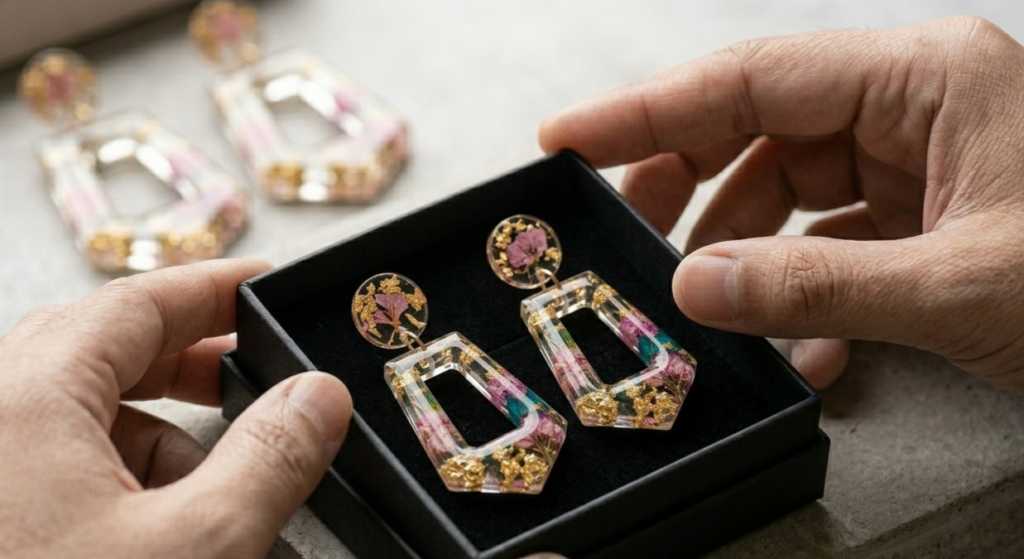
Your resin earrings are tough, but they aren’t invincible. To keep them looking like the day you bought them:
- The “Last Step” Rule: Always apply your perfume, hairspray, and makeup before putting on your earrings. The alcohol in these products can dull the high-gloss shine.
- The Sun Break: Don’t store them on a sunny windowsill. Even with UV stabilizers, the natural flowers inside are organic and can fade under 24/7 direct sun.
- The Microfiber Touch: If your earrings get fingerprints or look dull, wipe them with a dry microfiber cloth (like a glasses cleaner). Never use harsh chemicals or acetone.