
 Arpit
Arpit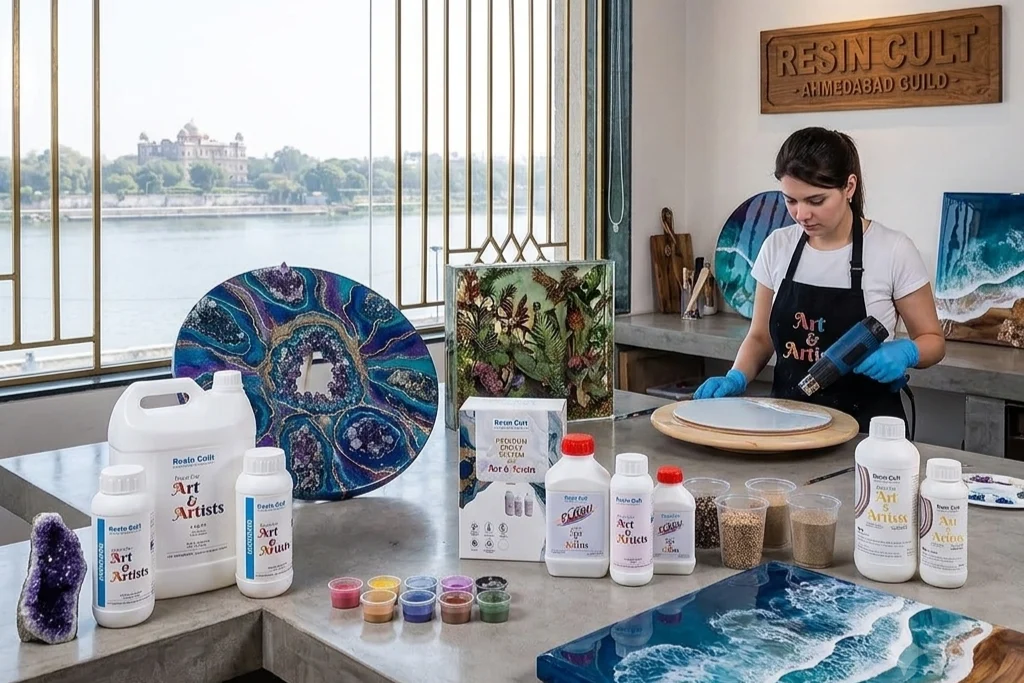
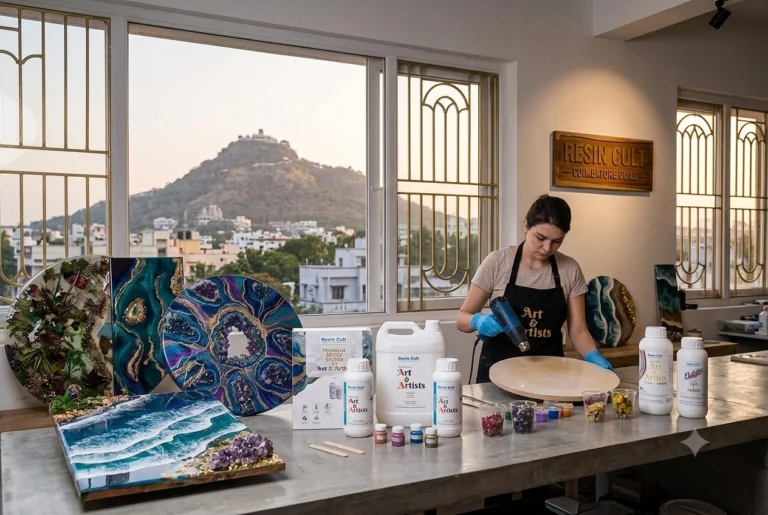
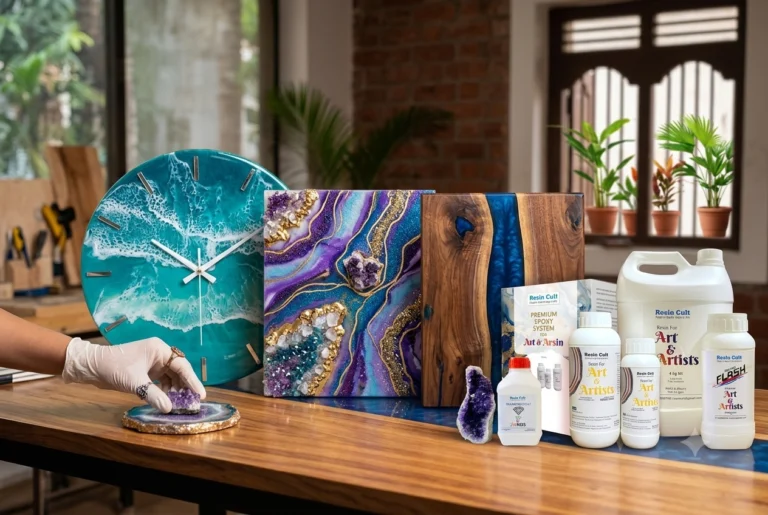
The creative landscape of Gujarat is witnessing a historic shift as resin art in ahmedabad evolves from a weekend hobby into a massive creative industry. Across design-centric neighborhoods like Satellite, SG Highway, Bodakdev, and C.G. Road, a growing community of makers, boutique fluid artists, and high-end industrial designers are turning liquid polymers into functional art. Whether you are preserving delicate local wedding bouquets, crafting intricate geode wall panels with intense metallic cells, or pouring deep live-edge wooden river tables, your success depends entirely on understanding the science of chemical cross-linking.
For local creators working with liquid polymers, navigating the market requires moving past basic consumer craft kits. Achieving a flawless glass-like sheen that resists the test of time means understanding how regional physics alters your liquid working windows. The baseline epoxy resin price in ahmedabad typically ranges between ₹400 and ₹1,250 per kilogram. This variance is strictly determined by formulation clarity, maximum pouring depth limits, and the presence of advanced stabilizers. Sourcing professional-grade resin material in ahmedabad guarantees your finished installations maintain structural integrity, release micro-bubbles automatically, and resist yellowing under ambient sunlight.
Understanding Epoxy Resin and Hardener Ahmedabad Cost Metrics
When auditing your studio expenses, evaluating an epoxy resin and hardener ahmedabad bundle requires looking past the surface sticker price. Many beginners make the costly mistake of purchasing cheap industrial floor coatings or general marine laminating glues from local hardware hubs, assuming all clear liquids cure identically.
Industrial-grade polymers lack high-purity optical stabilizers. When poured into artistic molds or onto wood surfaces, they trigger uncontrolled exothermic reactions, shrink heavily during cooling, and turn a brittle, amber hue within a matter of months. True artistic mediums use highly refined resins combined with cycloaliphatic amine hardeners. These professional systems are chemically balanced to maximize self-leveling performance, enhance scratch resistance, and preserve pure optical transparency. Investing a bit more upfront safeguards your time, protects expensive silicone molds, and ensures that delicate colorants stay vibrant for years.
Comprehensive Cost Breakdown by Application Viscosity
| Formulation Type & Viscosity Profile | Maximum Safe Pour Depth | Optimal Working Time | Average Price Range (per kg) |
|---|---|---|---|
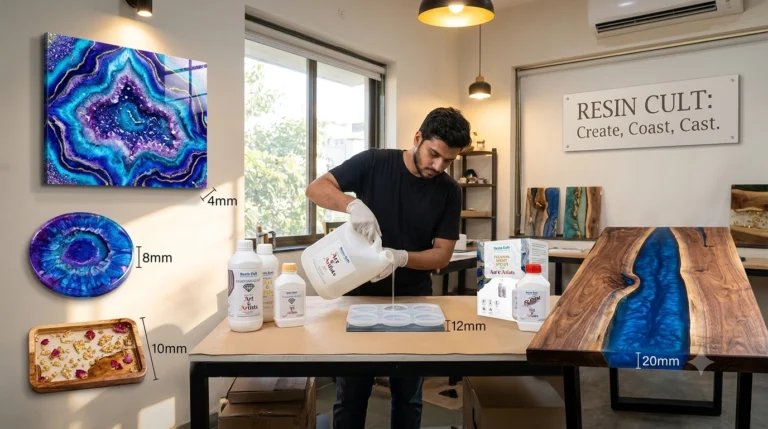
| High Viscosity (Geodes, Top Coats, Structural Lacing) | 3 mm – 5 mm | 45 minutes | ₹400 – ₹700 |
| Medium Viscosity (Coasters, Serving Trays, Art Boards) | 7 mm – 10 mm | 60 – 90 minutes | ₹600 – ₹950 |
| Low Viscosity (Deep Voids, River Tables, Florals) | 16 mm – 20 mm | 90+ minutes | ₹950 – ₹1,250+ |
Overcoming Regional Physics: The Ahmedabad Microclimate Challenge
Liquid polymers are intensely sensitive to atmospheric variables. Working successfully with an epoxy resin ahmedabad artists can rely on means learning how to master the dramatic seasonal shifts of Ahmedabad’s semi-arid climate.
1. The Dry Heat Velocity Factor (March to June)
During peak summer months, ambient temperatures across Gujarat routinely cross 40°C. High ambient heat acts as a massive chemical catalyst, compressing your liquid working time dramatically. If a product data sheet specifies a comfortable 45-minute working window at 25°C, that same mixture can undergo thermal flash-curing and begin to gel in less than 15 minutes inside an uncooled room.
- The Expert Correction: Always store your unopened chemical containers in a cool room. Mix smaller individual batches rather than one massive volume to keep the internal heat down. Additionally, plan your pouring schedules for the early morning hours when the air is coolest.
2. The Monsoon Humidity Spike (July to September)
The arrival of the monsoons brings sudden atmospheric shifts, often pushing indoor relative humidity past 65%. Because liquid amine hardeners are naturally hygroscopic, they eagerly absorb moisture directly from the surrounding air. This water contamination interrupts the curing process, resulting in a structural failure called “amine blush.” It shows up as a greasy, cloudy, or dull film across the top of your artwork.
- The Expert Correction: Never cast resin in an open studio during rainy weather. Always run an air conditioner or a dedicated space dehumidifier to keep your workspace humidity levels strictly below 60%.
3. Urban Particulate Management
Ahmedabad’s dry terrain and active urban expansion create high levels of fine, airborne dust. Because art resin remains sticky for hours during its initial cure stage, passing dust particles will settle into your work, marring a pristine high-gloss finish.
- The Expert Correction: Immediately after pouring your piece and sweeping it with a heat gun, place a clean, upturned plastic storage container over the work. This shields the curing liquid from airborne debris while keeping a stable microclimate underneath.
Fluid Dynamics: Matching Viscosity Profiles to Your Design Goals
Achieving a professional-grade finish depends on matching your specific design layout with the correct fluid viscosity. Using the wrong formula risks trapped micro-bubbles, bleeding colors, or runaway exothermic reactions that can melt your molds.
High-Viscosity Artistry: Structured Geodes and Ocean Waves
Creating complex multi-layered geode art, vertical abstract panels, or beach-inspired ocean lacing requires a thick fluid with high surface tension. A thin resin will cause your rich metallic pigments, heavy pastes, and alcohol inks to bleed together into a flat, muddy color palette.
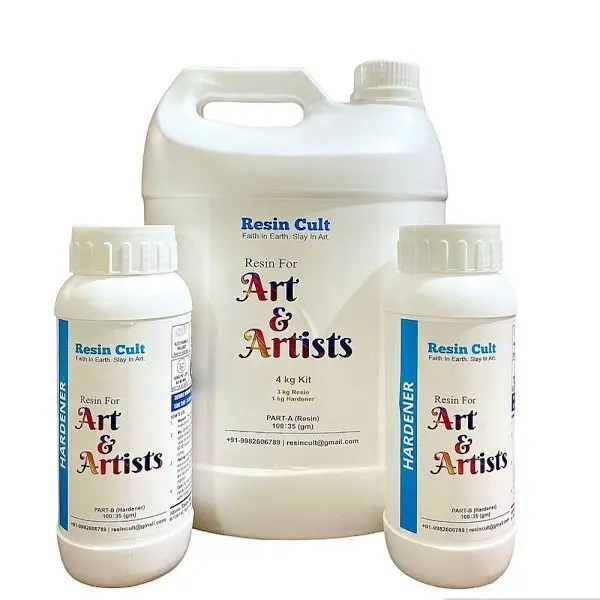
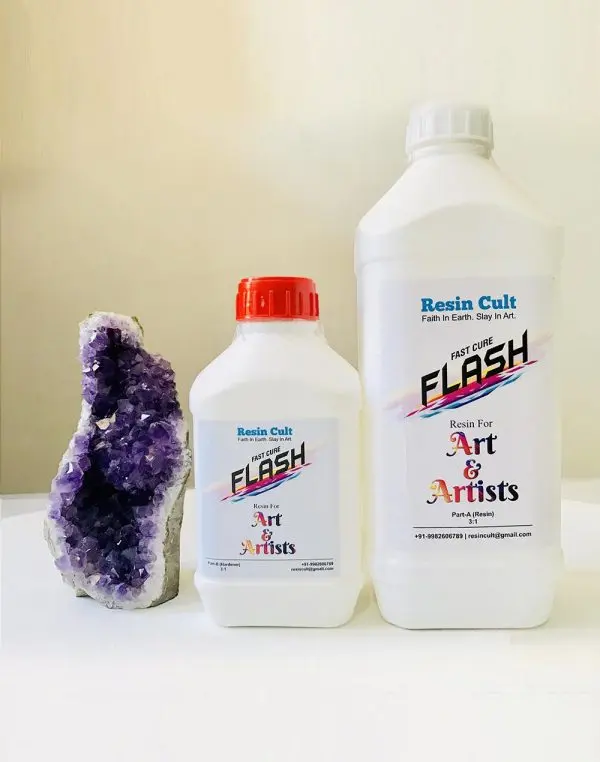
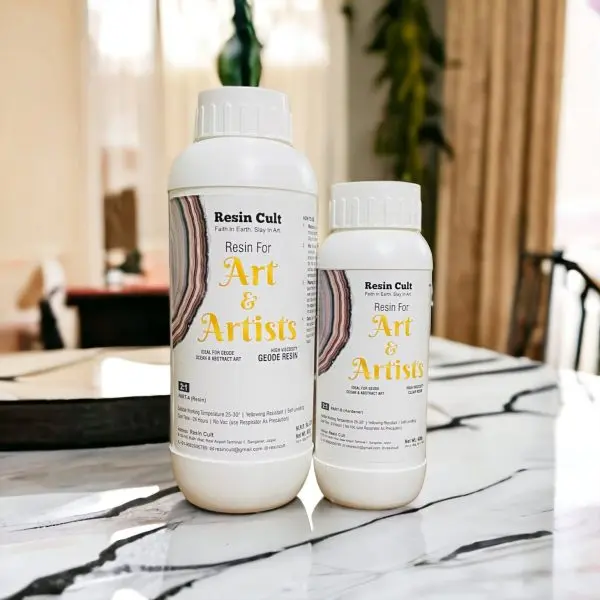
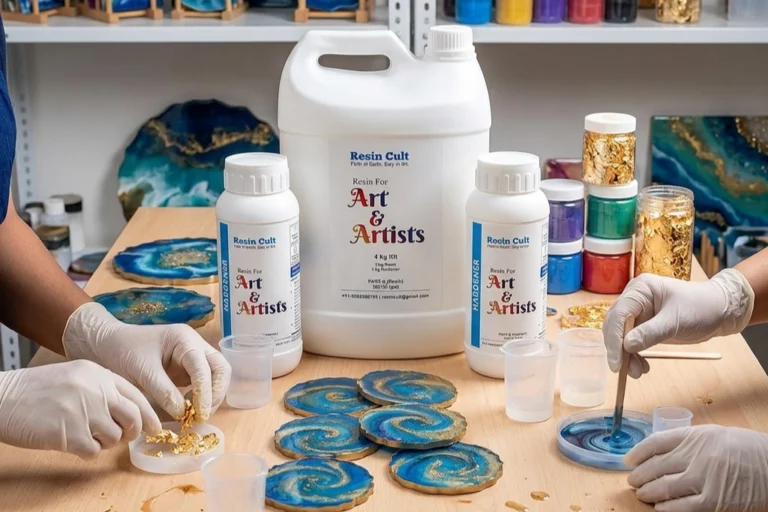
- The Solution: Geode Resin 2:1 (3 mm depth limit) or Artist Resin 2:1 (5 mm maximum layer thickness, 45-minute working window) by ResinCult. These formulations offer immediate holding power, keeping crisp pigment lines completely stable without muddying.
Medium-Viscosity Balance: Homeware Panels and Coaster Runs
Manufacturing functional everyday items like custom charcuterie boards, handle trays, geometric jewelry, or clear-cast coasters requires an ideal balance. You need a liquid that flows smoothly across wood surfaces but retains enough body to release air bubbles cleanly before setting.
- The Solution: Flash Resin 3:1 (7 mm depth, engineered for fast turnaround cycles) or Artist Resin 3:1 (10 mm thickness, offering an extended 90-minute open window) by ResinCult. These systems provide a wide working window, letting you clear out surface micro-bubbles using a torch before gelation begins.
Low-Viscosity Depth: Timber Voids and Deep Floral Encapsulation
Preserving three-dimensional bridal bouquets or pouring heavy, thick layers into live-edge wood chasms requires an incredibly thin, water-like viscosity. Thick coating resins release heat too quickly; if poured deep, they will overheat, smoke, turn amber, and crack open. Deep-casting requires a specialized, slow-curing formula that lets heat escape gently over several days.
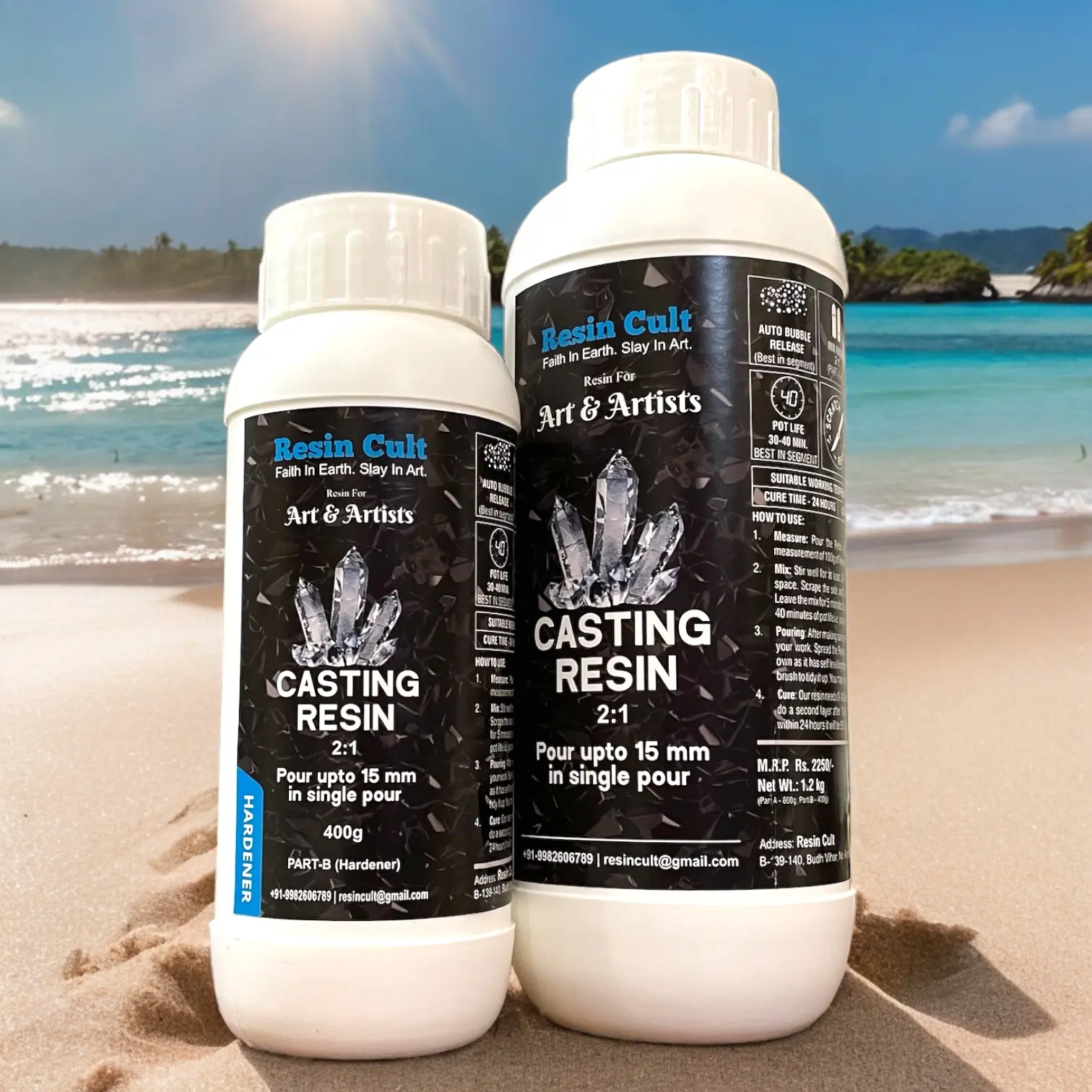
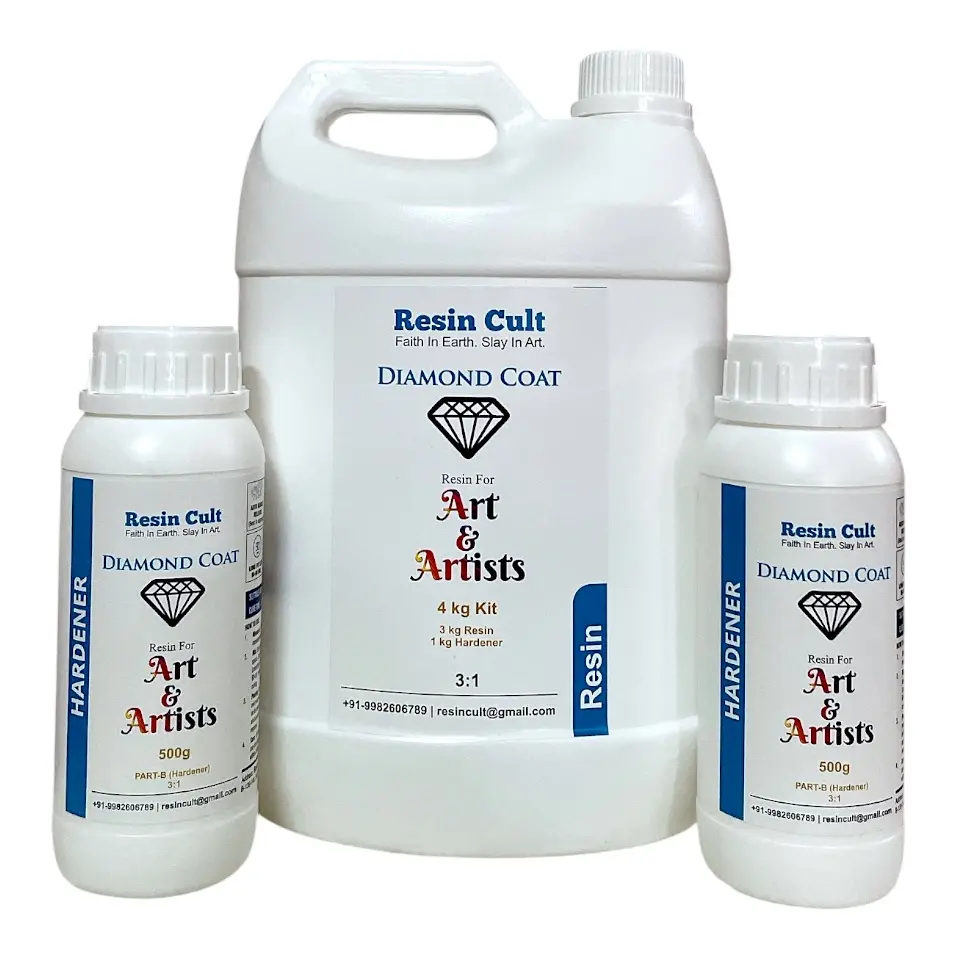
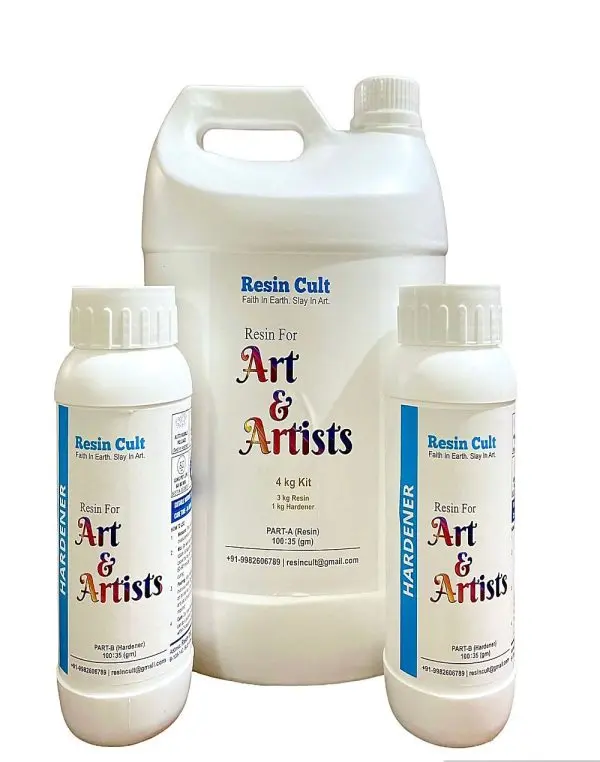
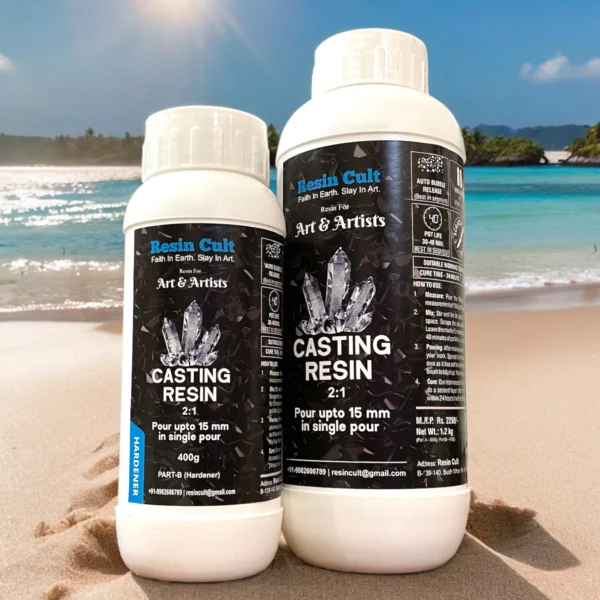
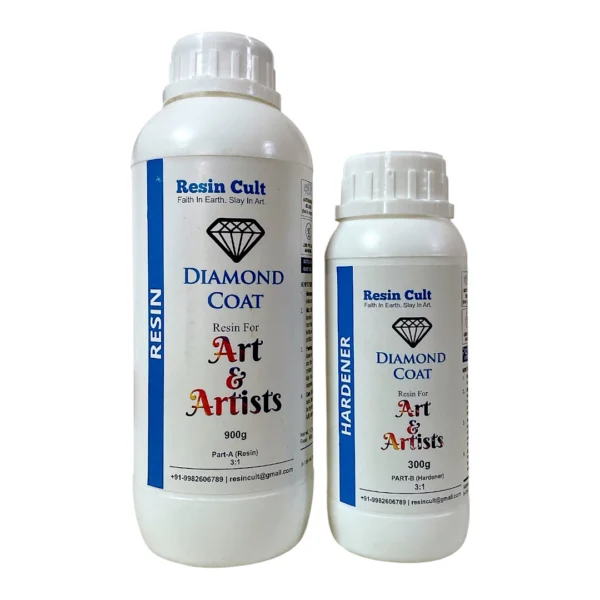
- The Solution: Crystal Casting 2:1 (16 mm single-pour limit) or Diamond Resin 3:1 (Up to 20 mm single-pour thickness) by ResinCult. These advanced systems ensure deep applications cure crystal-clear without shrinking, clouding, or optical distortion.

Critical Processing Steps: Minimizing Curing Failures
Flawless resin casting is rooted in strict chemical discipline. Avoid these classic beginner pitfalls to protect your project budget and get the most out of your high-end materials:
Step 1: Precision Weighing/Measuring
▼
Step 2: 3-Minute Stir in Cup 1 (Scrape Walls)
▼
Step 3: Transfer to Cup 2 (Stir for 1 Minute)
▼
Step 4: Keep Pigments Under 5% Total Volume
- The “Eyeballing” Disaster: Epoxy works through an exact molecular cross-link between Part A and Part B. Altering the component ratio to try and speed up or slow down the reaction will permanently ruin the cure, leaving your piece sticky, rubbery, or soft. Always use a digital weighing scale for weight-based formulas, or clear, straight-sided cups for volume-based products.
- The Single-Cup Inhomogeneity Trap: Simply stirring your components in one mixing cup leaves unmixed chemicals clinging to the walls and bottom corner seams. When poured out, these unmixed sections create sticky, uncured pockets on your finished piece. Always use the professional two-cup method: stir thoroughly for three full minutes, transfer the entire volume into a clean secondary container, and mix for one additional minute before pouring.
- Aggressive Direct Staining: Tinting your resin with water-based acrylic paints or wet dyes will disrupt the chemical matrix, leading to surface tears or sticky areas. Always keep your total pigment volume under 5% of the total mixture, and stick to dedicated dry mica powders, professional resin pastes, or alcohol inks.
Advanced Troubleshooting & Deep Material FAQs
Why does my poured resin layer still feel soft, bendable, or rubbery after 48 hours?
A soft or rubbery cure points directly to minor measurement mistakes, incomplete mixing, or a sudden temperature drop in your workspace overnight. To prevent this, use high-quality formulas like those from ResinCult, mix thoroughly using the two-cup method, and ensure your curing space stays at a consistent temperature of around 24°C to 25°C.
Is it safe to cast fresh, locally sourced flowers directly into clear casting epoxy?
No. Fresh organic matter contains internal moisture that reacts poorly with curing polymers, turning your vegetation brown, black, or moldy inside the block. Always dry your flowers completely by burying them in fine silica gel crystals for 7 to 14 days before encapsulating them in clear casting systems like Crystal Casting 2:1.
How do I eliminate stubborn micro-bubbles without damaging my silicone molds?
Keep your heat source moving constantly. Swiftly sweep a propane torch or a high-powered heat gun roughly three inches above the liquid surface immediately after pouring. The localized heat lowers the surface tension, allowing air pockets to pop instantly. Never hold the heat source over one area, as this will scorch the chemical surface or melt the mold itself.





Leave a reply