
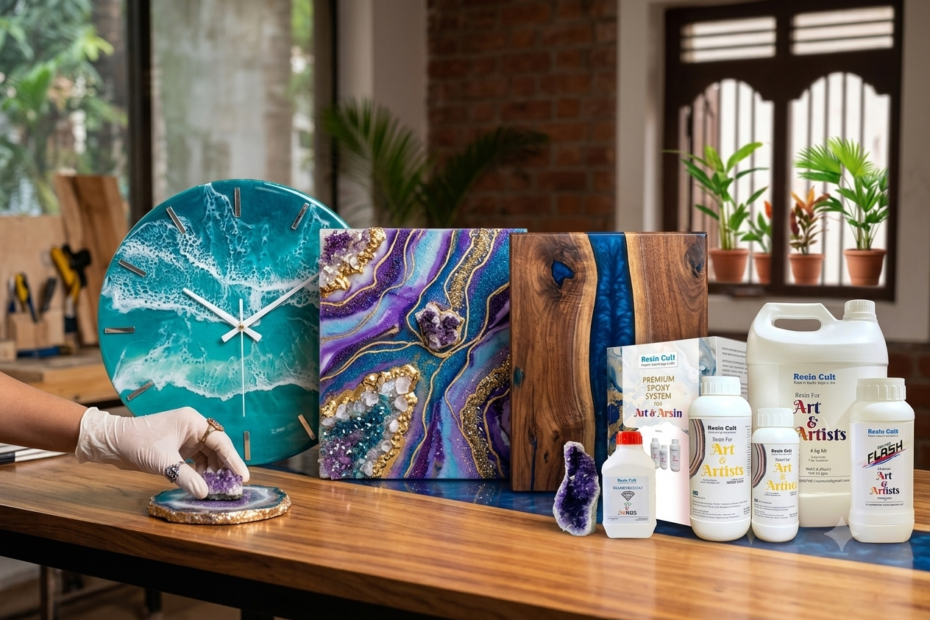
Resin Art in Bangalore is undergoing a massive creative evolution. Once a niche craft practiced by a handful of studio artists, it has blossomed into a full-scale design movement across creative hubs like Indiranagar, Koramangala, and Jayanagar. Artists, hobbyists, and furniture designers are constantly pushing the limits of the medium—creating everything from glass-topped ocean dioramas and floral preservation items to heavy live-edge river tables.
Premium art resin bangalore creators rely on typically costs between ₹450 to ₹1,300 per kilogram, depending on the transparency grade, anti-yellowing stabilizers, and maximum pouring depth. While basic commercial adhesives or industrial glues can be found for lower rates, true artistic endeavors demand professional-grade casting materials to guarantee structural integrity, scratch resistance, and perfect bubble release.
Understanding Epoxy Resin Prices and Formulations in Bangalore
Navigating the market for resin in bangalore requires looking past the baseline sticker price. Cheap industrial-grade compounds are heavily prone to severe yellowing within months, shrinking, or thermal cracking. High-quality artistic systems utilize premium clear compounds treated with advanced UV inhibitors.
Average Market Breakdown by Application
| Formulation Type | Pouring Depth | Working Time | Average Price Range (per kg) |
| High Viscosity (Geodes, Coatings, Lacing) | 3 mm – 5 mm | 45 minutes | ₹450 – ₹700 |
| Medium Viscosity (Coasters, Trays, Art Boards) | 7 mm – 10 mm | 60 – 90 minutes | ₹650 – ₹950 |
| Low Viscosity (River Tables, Floral Deep Casts) | 16 mm – 20 mm | 90 minutes | ₹950 – ₹1,300+ |
Investing in a premium formulation protects your labor, preserving delicate pigments and eliminating structural failures.
Choosing the Right Epoxy Resin in Bangalore for Your Project
Achieving a professional finish requires matching the scope of your design to the proper chemical viscosity. Pouring a shallow coating formula too thick results in a runaway exothermic reaction (generating smoke and cracks), while pouring a slow-curing deep cast into a tiny mold means it may fail to generate the necessary warmth to solidify.
1. Small Crafts: Coasters, Trays, and Fine Jewelry
Small jewelry and daily kitchen accessories require a fast-curing formula that clears micro-bubbles rapidly and cures with an incredibly hard, clear coat.
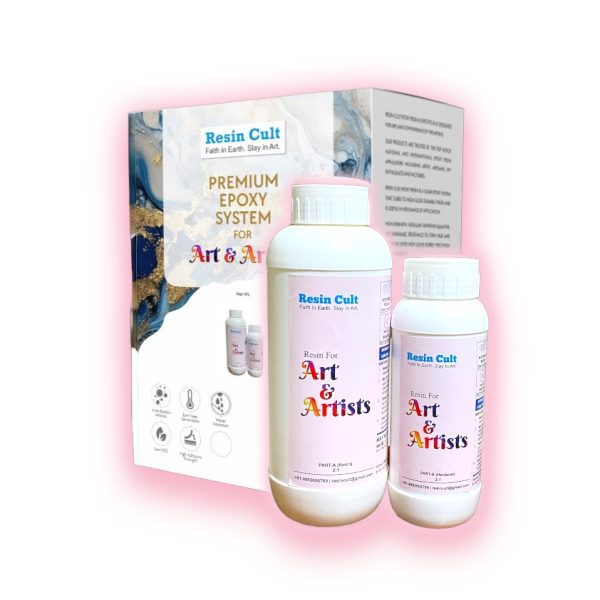
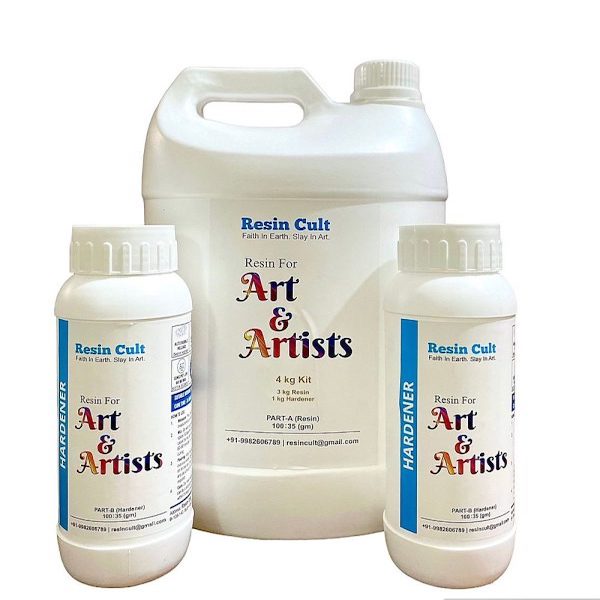
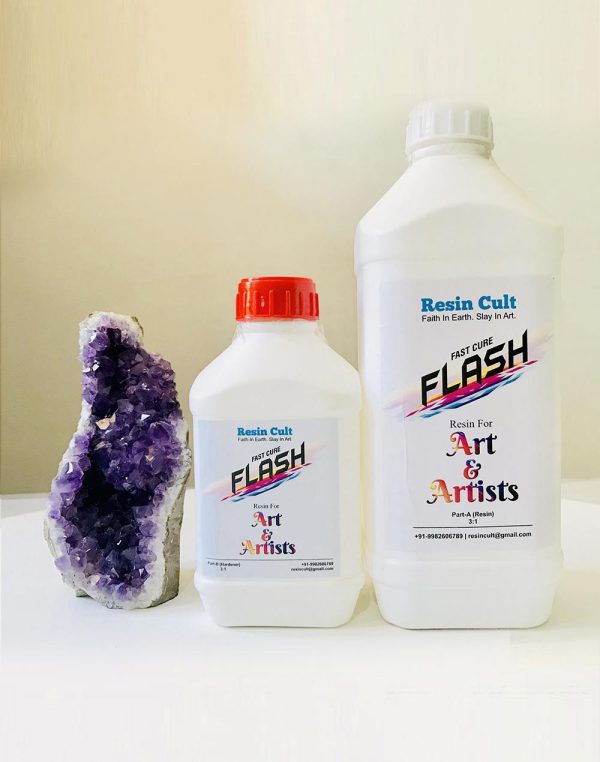
- The Expert Choice: Flash Resin 3:1 (7 mm depth) or Artist Resin 3:1 (10 mm depth, 90-minute working time) by ResinCult. These provide an open working window, allowing you to easily skim surface bubbles with a heat gun before the gelation process kicks in.
2. High-Gloss Top Coats, Geodes, and Textures
Intricate geode paintings and ocean pouring art require high-viscosity mediums that hold metallic powders and rich alcohol inks in place without bleeding together.
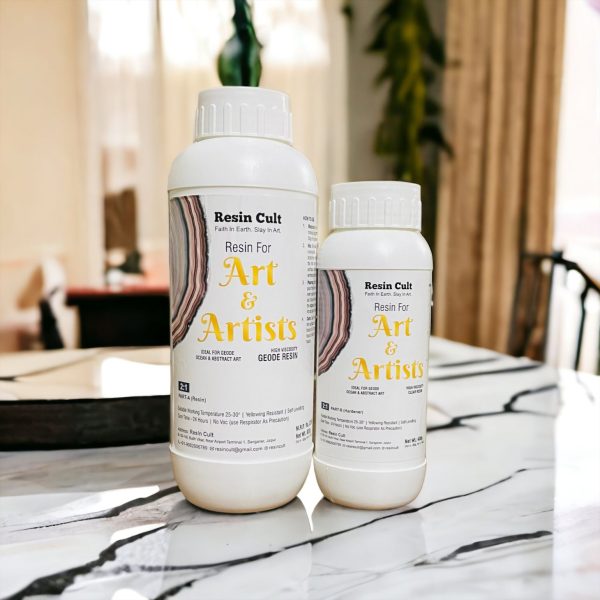
- The Expert Choice: Geode Resin 2:1 or Artist Resin 2:1 by ResinCult. With a tighter 3 mm to 5 mm maximum pouring depth and a focused 45-minute working window, it gives you crisp lines, dynamic cells, and texturized lacing.
3. Deep Casting: River Tables and Floral Preservation
Encapsulating heavy bridal bouquets or building solid wooden furniture demands a specialized, low-viscosity formula engineered to release heat very slowly over a prolonged period.
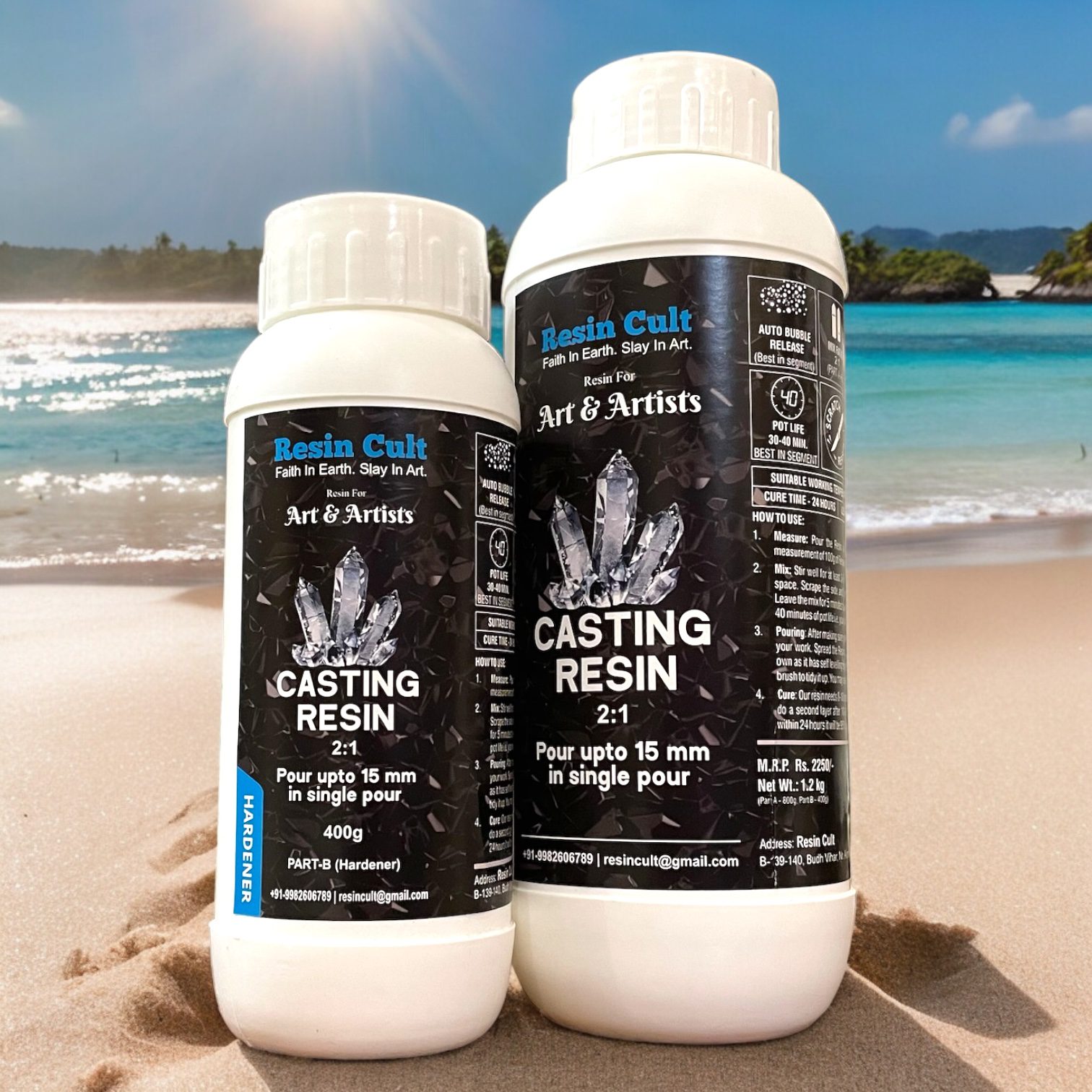
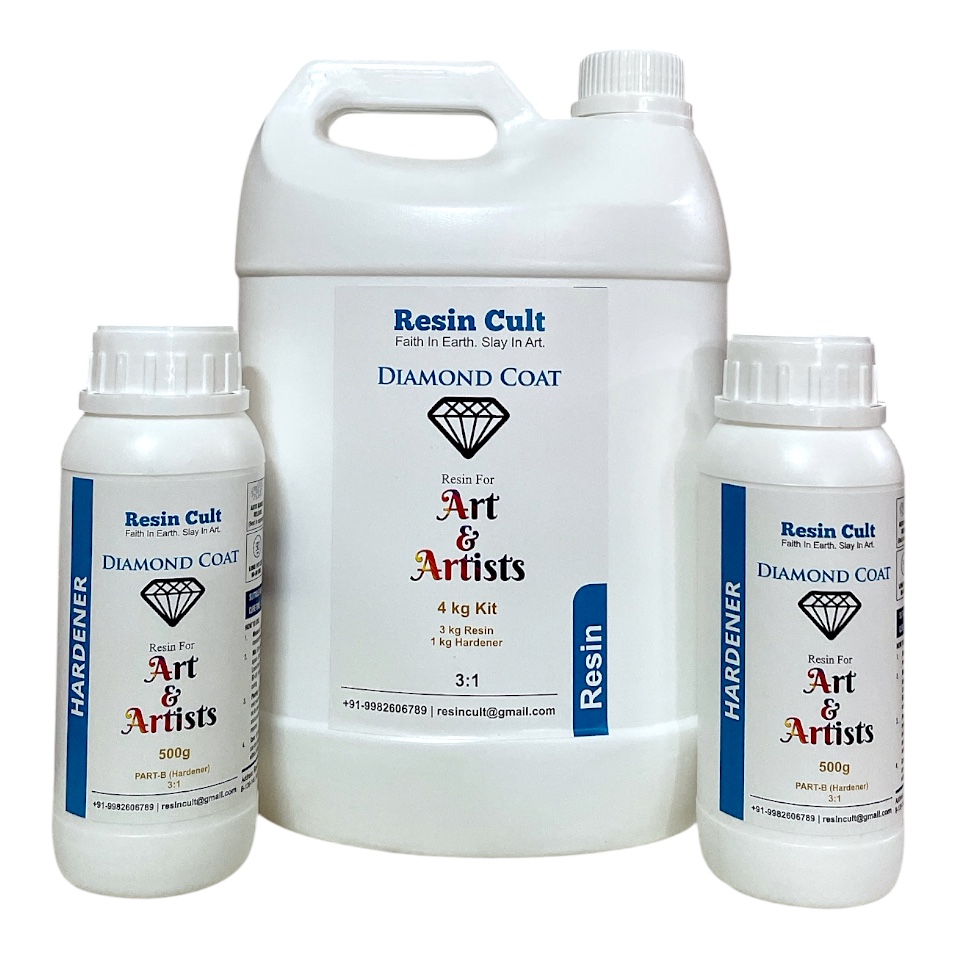
- The Expert Choice: Crystal Casting 2:1 (16 mm depth) or Diamond Resin 3:1 (20 mm depth) by ResinCult. These crystal-clear formulations permit massive pours without shrinking, clouding, or optical distortions.
Mastering Bangalore’s Weather: Pro Tips for a Perfect Cure
The unique climate changes across Bangalore play an active role in how epoxy resin in bangalore transforms from a liquid to a durable solid.
- Managing the Rainy Season Humidity: Bangalore’s heavy monsoons can elevate indoor humidity past 70%. When moisture enters an open mixing cup, it creates a cloudy, hazy finish or causes a tacky film known as “amine blush.” Always cast inside a climate-controlled room or use a small space dehumidifier when working during heavy downpours.
- Balancing Moderate Temperatures: The sweet spot for mixing resin is between 22°C and 25°C. During cooler winter months or crisp mornings in Bangalore, the chemical cure can decelerate significantly. To fix this, give your closed bottles a warm water bath before measuring to lower viscosity and encourage easy bubble removal.
- Dust and Air Movement: High airborne particulate levels in bustling city areas can settle directly into an open, sticky mold. Always shelter your curing project under a clean, inverted plastic container for the first 12 to 24 hours.
Step-by-Step Guide to Flawless Resin Work
- Calculate Dimensions Precisely: Measure your mold dimensions thoroughly to estimate the volumetric needs, preventing waste given the premium price of high-end materials.
- Weigh with Accuracy: Use a digital scale or strict volumetric cups based on your specific product ratio (3:1 or 2:1). Eyeballing or changing ratios to speed up curing will result in a permanently sticky mess.
- The Double-Cup Mixing Process: Stir Part A and Part B continuously for 3 full minutes, scraping down the walls and bottom of your container. Pour the liquid into a second clean cup and mix for another 60 seconds to ensure total chemical homogeneity.
- Pigmentation Adjustments: Fold in your mica powders, liquid tints, or custom pastes carefully. Keep total colorants under 5% of the total mixed volume to safeguard the ultimate chemical cure.
Quick FAQs Section
Why is my resin artwork soft or sticky even after 48 hours?
A soft cure typically happens due to inaccurate measuring ratios, incomplete mixing techniques, or casting in an environment that is too cold or humid. Always use professional mixtures like those from ResinCult, stir thoroughly using the two-cup method, and monitor your room conditions.
Can I pour a standard top-coat resin into a deep table mold?
No. Standard top-coat formulas are engineered to release heat fast in thin layers. If you pour them deep, they will experience a severe thermal runaway effect—turning yellow, smoking, cracking, or breaking your silicone molds. For deep castings, always use specialized products like Diamond Resin 3:1.
Where can I buy high-quality resin art supplies delivered safely in Bangalore?
While traditional local hardware and hobby shops carry standard everyday craft glues, professional creators buy their premium resin compounds directly online from specialized brands like ResinCult to guarantee high UV resistance, strict batch consistency, and smooth curing.
How do I pop stubborn micro-bubbles in my resin layers?
Gently sweep a butane torch or a dedicated heat gun about 2 to 3 inches above the freshly poured surface. The heat lowers the surface tension momentarily, allowing trapped air pockets to escape and pop instantly. Never linger in one spot to avoid scorching the resin.
Is it safe to cast freshly cut flowers directly into clear epoxy?
No. Fresh vegetation contains moisture that will react poorly with epoxy, turning your flowers brown, black, or moldy over time. Always dry your flowers completely in silica gel crystals for 1 to 2 weeks before encapsulating them in a clear casting resin.