

The cultural capital of West Bengal is undergoing an industrial-artistic renaissance as resin art in kolkata shifts from a passionate hobby into a sophisticated creative economy. Across key creative neighborhoods spanning Salt Lake, Gariahat, Park Street, and New Town, local fluid artists, interior decor startups, and traditional furniture craftsmen are embracing liquid polymers. Whether you are preserving local celebratory marigolds, pouring high-gloss oceanic wall murals with dynamic cell structures, or molding thick, live-edge wood river tables, executing a flawless glass-like layer depends entirely on understanding the science of chemical cross-linking.
For independent creators manipulating specialized liquids, the primary key to achieving heirloom-quality durability is knowing how to select the right medium. The general epoxy resin price in kolkata fluctuates significantly from ₹400 to ₹1,300 per kilogram. This variation is strictly determined by formulation purity, anti-yellowing performance, and the integrated molecular weight of the raw chemical base. Utilizing highly refined, professional-grade epoxy resin kolkata materials ensures that finished crafts naturally expel micro-bubbles, retain extreme clarity, and resist structural shrinkage over a long life cycle.
Deconstructing the Resin Price in Kolkata: Cost vs. Performance Matrix
When budgeting for a complex project, analyzing raw expenses requires a strict comparison of chemical grading rather than looking only at a simple sticker cost. Beginners looking for basic supplies often buy cheap industrial floor sealers or laminating fiberglass glues from neighborhood markets, thinking all clear liquids behave the same way.
Industrial-grade compounds completely lack high-end UV-stabilizing additives. When poured into open molds, they trigger uncontrolled exothermic reactions, shrink violently, and turn a brittle, amber-yellow hue within months of room-light exposure. True artistic mediums integrate refined liquid binders with cycloaliphatic amine hardeners. These professional systems are precisely balanced to support consistent self-leveling, offer deep scratch-resistant hardness, and maintain absolute optical transparency over time.
Comprehensive Formulation Cost and Viscosity Breakdown
| Material Viscosity Profile | Maximum Safe Pouring Depth | Optimal Open Working Window | Average Local Price Range (per kg) | Best Suited Project Layouts |
| High Viscosity Art Coating | 3 mm – 5 mm | 45 minutes | ₹400 – ₹650 | Abstract geode wall panels, layered wave effects, protective counter seals |
| Medium Viscosity Multi-Pour | 7 mm – 10 mm | 60 – 90 minutes | ₹600 – ₹950 | Custom charcuterie serving trays, custom coasters, thick geometric jewelry molds |
| Low Viscosity Clear Casting | 16 mm – 20 mm | 90+ minutes | ₹950 – ₹1,300+ | Large botanical preservation displays, deep wood voids, timber river tables |
Overcoming Regional Physics: The Kolkata Microclimate Challenge
High-performance polymers are intensely sensitive to ambient moisture and room temperatures. Achieving consistent success with premium epoxy resin kolkata systems requires adapting your workflow to handle the unique tropical climate patterns of West Bengal.
1. The Gangetic Monsoon Humidity Crisis
During Kolkata’s prolonged monsoon season, indoor relative humidity levels routinely shoot past 75%. Because clear liquid hardeners are naturally hygroscopic, they quickly draw water vapor directly out of the ambient atmosphere. This environmental water contamination leads to a chemical failure known as “amine blush.” It ruins your work by leaving a greasy, hazy, or sticky white film across the top of your cured art piece.
- The Master Correction: Never pour or mix liquid polymers in an open, unventilated studio while it is raining outside. Always run a dedicated room air conditioner or a space dehumidifier to keep your workspace humidity levels consistently below 60%.
2. High-Velocity Summer Excursions
During peak summer months, regional temperatures frequently jump above 38°C. This extreme ambient heat acts as a massive chemical catalyst, drastically shortening your liquid open time. A premium formulation that offers a relaxed 45-minute working window at a standard 25°C room temperature can rapidly overheat and flash-cure inside a hot room in under 15 minutes.
- The Master Correction: Store your raw chemical containers inside a temperature-regulated room. Mix smaller, distinct batches rather than one massive volume to keep internal heat buildup down, and plan your complex pouring schedules for the early morning hours.
3. Urban Particulate and Fiber Defense
Kolkata’s bustling urban sprawl naturally carries high levels of fine airborne dust and textile fibers. Because art mediums remain sticky for hours during the early cross-linking phase, passing dust particles will easily settle onto the open surface, permanently ruining a smooth finish.
- The Master Correction: Immediately after pouring out your mixed liquid and sweeping away air pockets with a heat gun, cover your work with a clean, inverted plastic storage container. This builds an isolated microclimate that blocks settling dust.
Mapping Viscosity Profiles to Specific Project Layouts
Selecting the ideal chemical profile means matching your specific project depth with the proper fluid viscosity. Mixing a shallow coating resin too thick triggers a dangerous runaway exothermic reaction that melts silicone molds and forms deep cracks, while pouring a slow-curing deep cast into a tiny mold prevents the fluid from generating the necessary internal heat to harden.
Table 2: Viscosity Mapping and Material Selection Guidelines
| Target Creative Project | Required Viscosity Behavior | Critical Fluid Threat Risk | Strategic Product Recommendation |
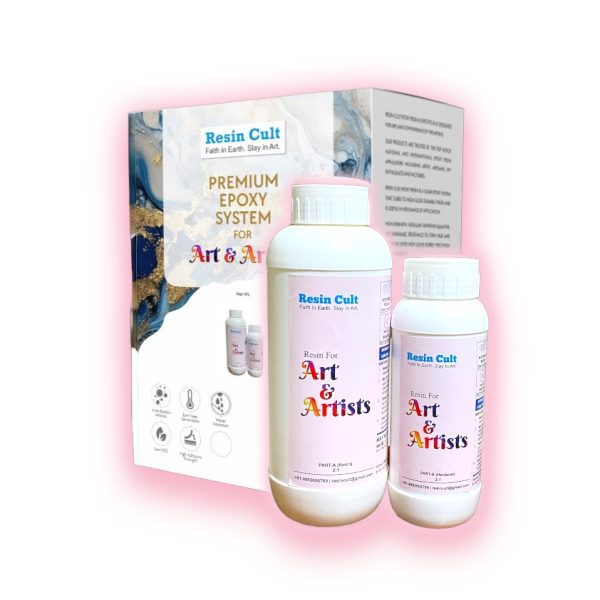
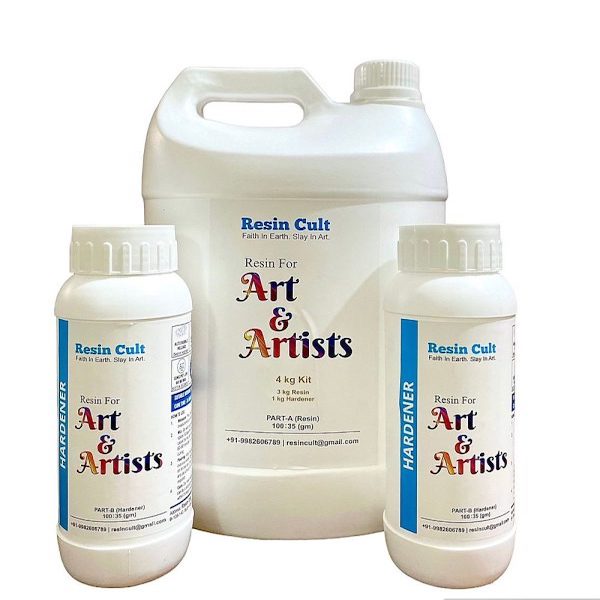
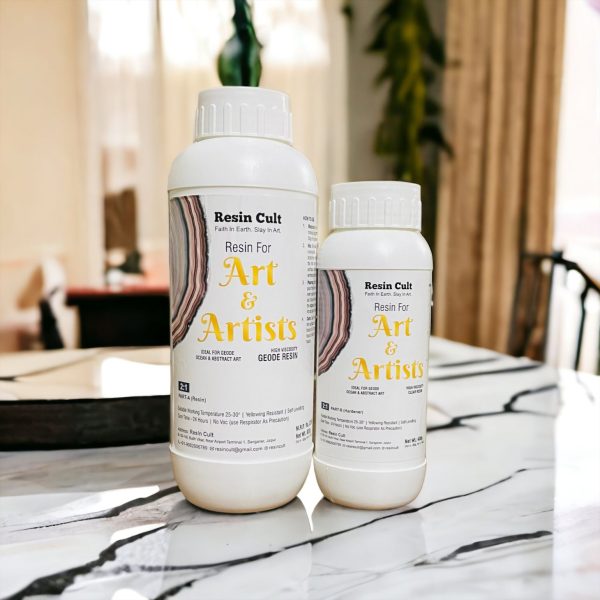
| Multi-Toned Oceans & Geodes | High surface tension; stops distinct pigment lines and metallic layers from moving. | Colors bleed and run together into a flat, muddy gray hue. | Geode Resin 2:1 or Artist Resin 2:1 by ResinCult |
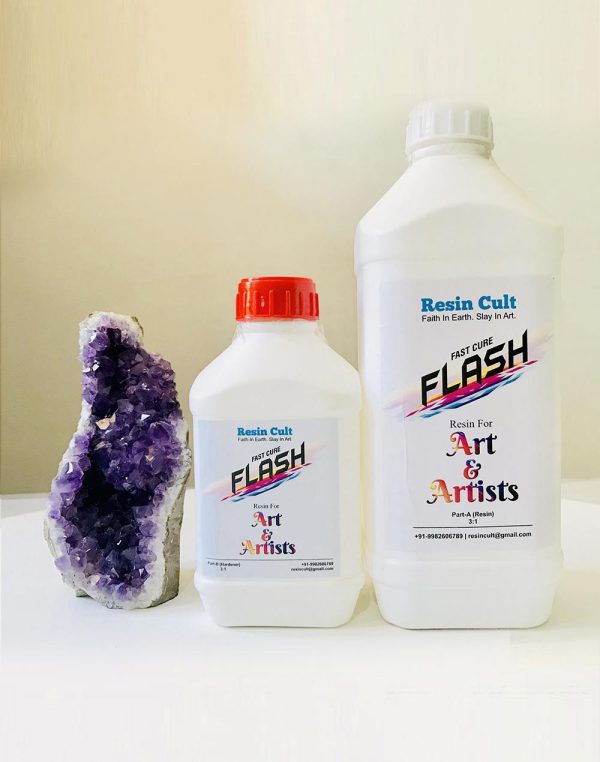
| High-Gloss Trays & Coasters | Balanced body; allows trapped air pockets to rise cleanly while leveling out smoothly. | Micro-bubbles stay trapped along the lower edges of the mold. | Flash Resin 3:1 or Artist Resin 3:1 by ResinCult |
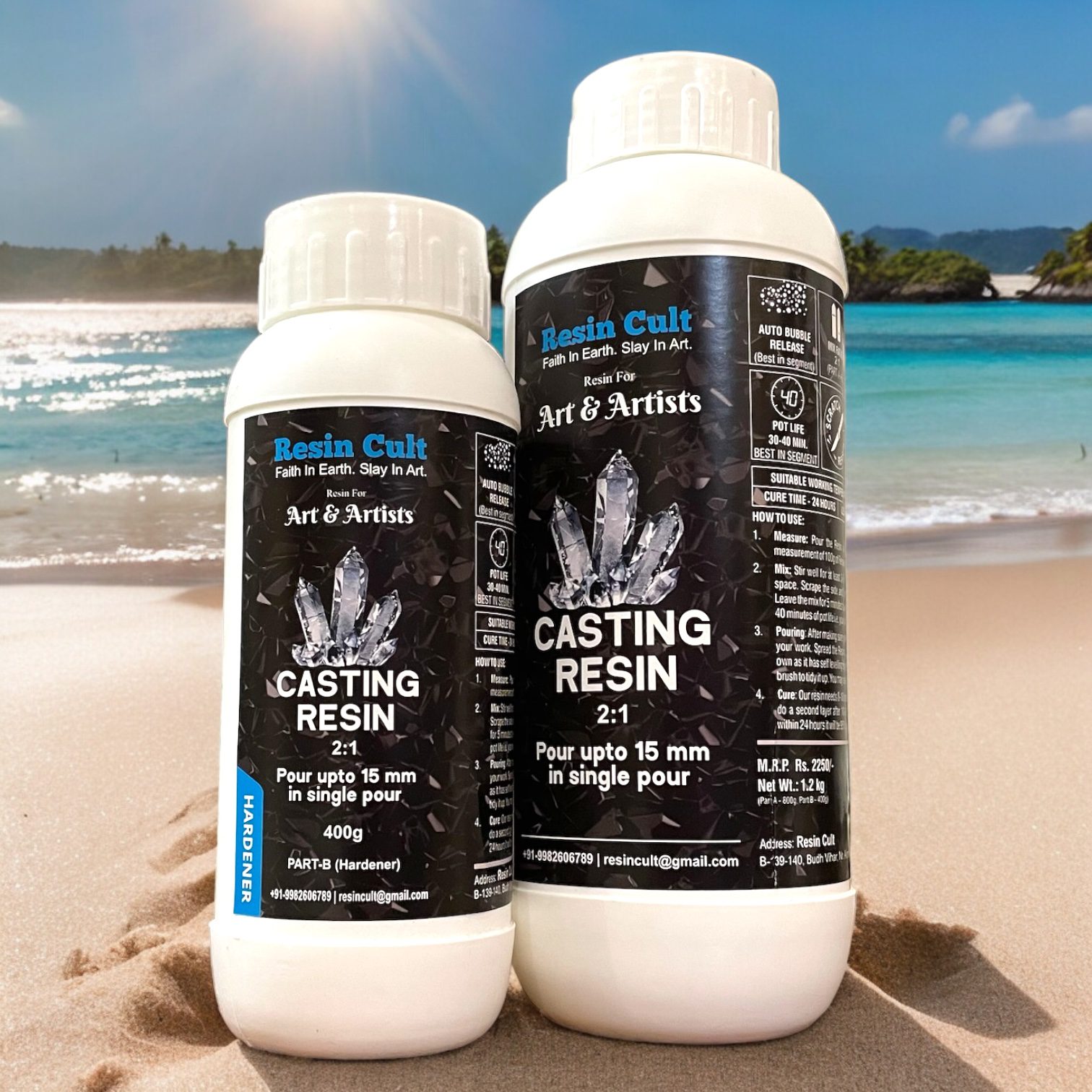
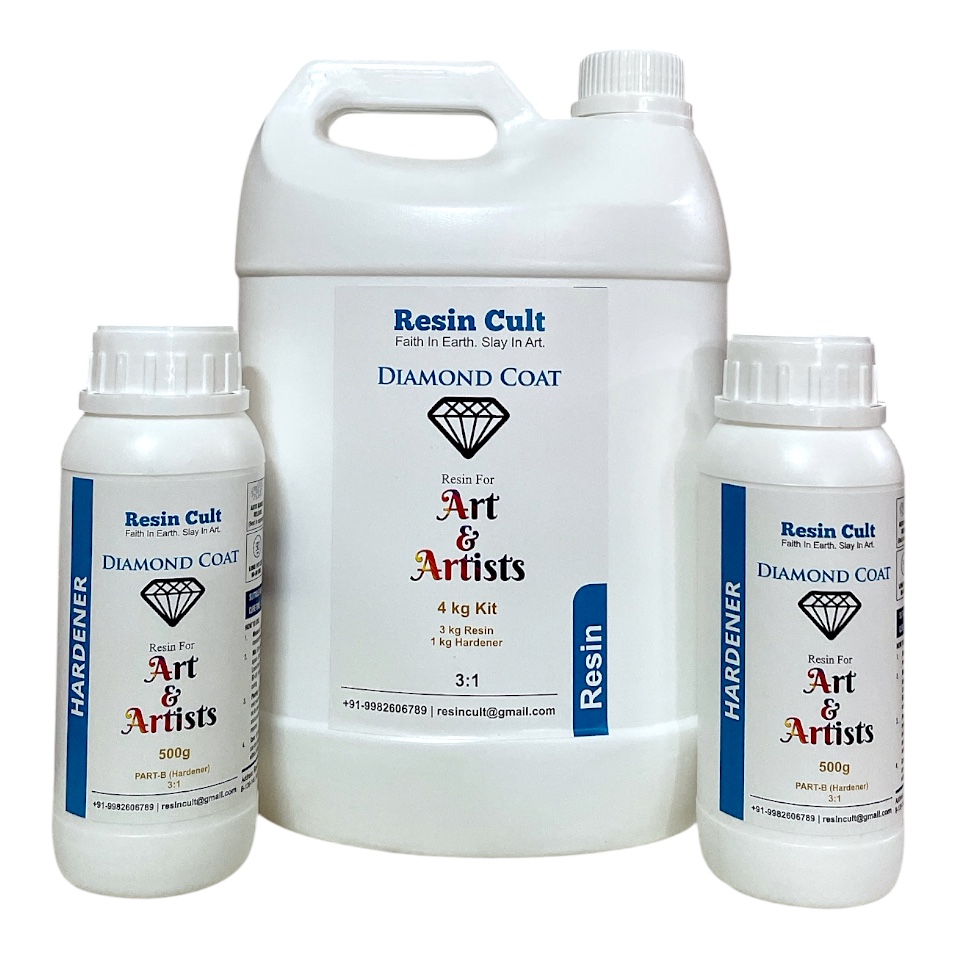
| Bridal Florals & River Tables | Water-like fluidity; flows deeply into intricate organic folds without building heat. | Thermal flash-curing, bubbling, extreme shrinkage, or amber scorching. | Crystal Casting 2:1 or Diamond Resin 3:1 by ResinCult |
The Chemical Protocol: Minimizing Curing Failures
A mirror-smooth, glass-like finish is achieved through strict studio discipline rather than luck. Avoid these classic beginner pitfalls to protect your workshop budget and get the best results out of your high-end materials:
Studio Processing Pitfalls and Expert Fixes
| Common Curing Error | Root Scientific Cause | Visible Material Damage | The Expert Correction Protocol |
| Volumetric Guessing | Eyeballing fluid ratios disrupts the molecular cross-link. | Permanent sticky spots, soft areas, or rubbery flexibility. | Always measure using a digital scale for weight-ratios or square cups for volume-ratios. |
| Single-Cup Mixing Trap | Unmixed base liquids cling to the container’s side seams and bottom corners. | Swirling sticky trails or uncured wet spots on your finished surface. | Use the two-cup method: stir for 3 minutes, transfer to a new cup, and mix for 1 more minute. |
| Acrylic Paint Over-tinting | Adding water-based colorants corrupts the polymer matrix. | Structural micro-tears, surface dimples, or a chalky cure. | Keep total pigment volume under 5% of your mix; use dry mica powders or resin pastes. |
Resin Art in Kolkata FAQs
Why does my poured resin layer still feel soft, bendable, or rubbery after 48 hours?
A soft or rubbery cure points directly to minor measurement mistakes, incomplete mixing, or a sudden temperature drop in your workspace overnight. To prevent this, use high-quality formulas like those from ResinCult, mix thoroughly using the two-cup method, and ensure your curing space stays at a consistent temperature of around 24°C to 25°C.
Is it safe to cast fresh, locally sourced flowers directly into clear casting epoxy?
No. Fresh organic matter contains internal moisture that reacts poorly with curing polymers, turning your vegetation brown, black, or moldy inside the block. Always dry your flowers completely by burying them in fine silica gel crystals for 7 to 14 days before encapsulating them in clear casting systems like Crystal Casting 2:1.
How do I eliminate stubborn micro-bubbles without damaging my silicone molds?
Keep your heat source moving constantly. Swiftly sweep a propane torch or a high-powered heat gun roughly three inches above the liquid surface immediately after pouring. The localized heat lowers the surface tension, allowing air pockets to pop instantly. Never hold the heat source over one area, as this will scorch the chemical surface or melt the mold itself.